
A lion works brilliantly in decor because it instantly brings strong presence: a recognizable silhouette, a graphic mane, real character without having to fill the room with objects. Pair it with origami or papercraft, and the look feels lighter than traditional animal decor. The facets, folds, and volume soften the heavy effect and give the piece a handmade, almost architectural feel.
In a living room, bedroom, or creative workspace, the goal is not to build the entire decor around one motif. The right balance is to choose one standout piece, then shape a coherent atmosphere around it: natural materials, understated colors, a few geometric echoes, and a wall calm enough to let the form breathe.
Why a lion works so well as graphic wall decor
The lion is expressive, but it can quickly feel overwhelming when the support is highly realistic or visually busy. That’s exactly where origami style comes into its own. Angular lines simplify the subject, strip back the details, and keep only what matters most: posture, mane, gaze, volume. The result is contemporary animal decor that’s much easier to integrate than a classic illustration.
In a modern interior, this look works especially well with warm tones: beige, terracotta, light brown, matte gold, natural wood, or off-white. These shades connect naturally with the world of paper and avoid an overly literal “trophy” effect. For a more luxurious wall decor inspiration, you can also look at decorative pieces in the same spirit, like this origami-style lion artwork, then echo the faceted look in a paper composition or a gallery wall.
Choosing the right spot without overloading the room
A paper lion decoration or origami-style piece deserves a visible place, but not necessarily an excessively central one. Above a sofa, it can replace a large canvas. In an entryway, it creates a strong first impression. In an office, it brings more assertive energy, especially if the space is used for creating, drawing, running a business, or working on hands-on projects.
The key is to keep the wall relatively simple. A bold wallpaper, too many frames, or shelves packed too full can flatten the relief. On the other hand, a warm white, sand, linen, sage green, or deep blue background can really highlight the facets. If the room is small, a medium-sized piece is usually the better choice, with enough space left around it. Empty space is part of the composition.

Mix paper, wood, and textiles for a warmer look
Papercraft naturally has a precise, geometric feel. To keep the atmosphere from becoming too cold, it works well alongside softer materials. A light wood frame, a woven rug, linen curtains, or a warm-glow lamp are often enough to make the whole setup feel more welcoming. The contrast between crisp paper folds and natural textures creates decor that feels more alive.
You can also play with subtle visual echoes. For example, a mane in honey tones can be paired with an ochre cushion or a ceramic vase. A black-and-white lion can work beautifully with slim frames, graphic objects, or a minimalist bookshelf. The goal isn’t to scatter lions all over the room, but to carry two or three colors through the space.
Creating a natural link between papercraft and animal wall art
Successful decor usually follows a visual thread. Papercraft brings texture and a handmade dimension; artworks and prints let you expand the aesthetic without repeating exactly the same motif. If you want to build a fuller wall composition, it helps to mix one three-dimensional piece with flatter visuals: an animal illustration, a stylized photograph, a graphic poster, or a series of small frames.
This approach works especially well in interiors inspired by nature, soft safari themes, curiosity-cabinet styling, or family-friendly decor. To broaden the inspiration beyond the lion alone, you can explore a wide range of animal wall art on TabloDéco.fr and choose shapes or colors that respond to the papercraft already in the room.
Adapting the style to the room
In a child’s bedroom, the lion can feel softer: pastel colors, textured paper, rounded shapes, paired with clouds, stars, or savannah animals. In an adult living room, more muted contrasts, large blocks of color, and matte finishes usually work better. In a studio or creative space, you can go bolder with a more colorful version, cut paper elements, color tests, and a freer wall composition.
The same idea can therefore create very different atmospheres. A gold lion on a midnight blue background feels chic. A kraft-paper lion on a white wall feels more artisanal. A multicolored version placed near a craft shelf leans more into the DIY world and paper-based creativity.
Practical tips before fixing your wall decor
Before drilling or attaching anything permanently, it’s worth testing the height. Wall decor usually feels better when its center sits roughly at eye level. If it goes above a piece of furniture, leave enough space so it doesn’t look awkwardly low. A kraft-paper template cut to the size of the object is an easy way to visualize the footprint without taking any risk.
Finally, think about lighting. Side lighting reveals relief better than frontal lighting. For papercraft or faceted decor, a soft wall light, a table lamp, or natural light from a window can create beautiful shadows. Those subtle variations in depth are exactly what give decorative origami its charm: an image that shifts slightly depending on the time of day, the light, and where you’re standing.
With one strong statement piece, a few well-chosen materials, and coherent visual links, an origami lion becomes more than animal decor. It becomes a decorative anchor point: graphic, warm, and original enough to give the room real personality.
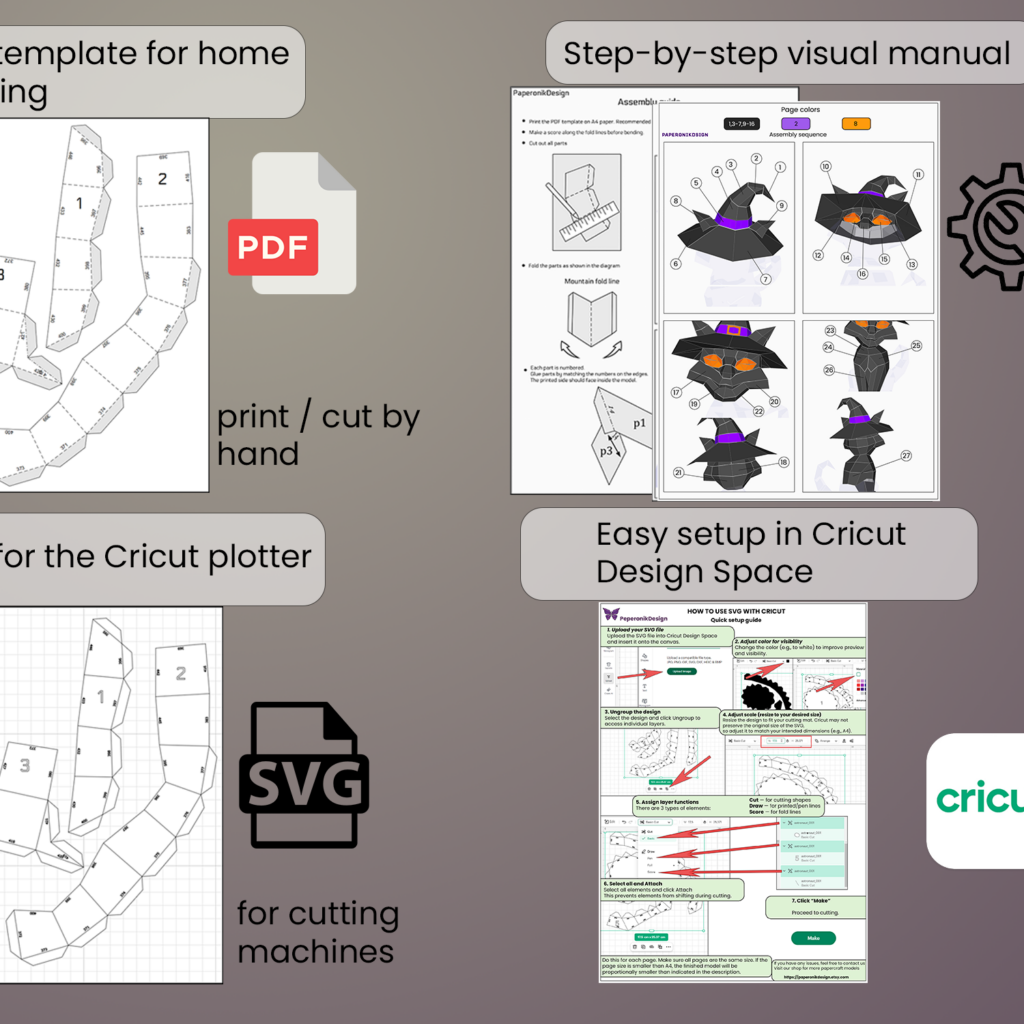
The next step is the paper itself: pick a model from our free papercraft to print or download our downloadable PDF papercraft kit.