Looking for a statement décor piece that feels worlds apart from a generic frame or a poster you’ve already seen everywhere? Deer papercraft is exactly that: graphic, warm, easy to personalise, and surprisingly satisfying to build yourself. With just a few sheets, some cutting and gluing, you can create an elegant wall trophy, a freestanding deer sculpture, a party mask, or even a functional accent for your interior. In this guide, you’ll discover why the deer is still a décor star in 2026, the 10 best models to assemble based on your skill level and style, how to choose the right kit, and how to build it without the stress. If you want a clean, long-lasting, truly decorative result, you’re in the right place.

Why deer papercraft is huge in 2026
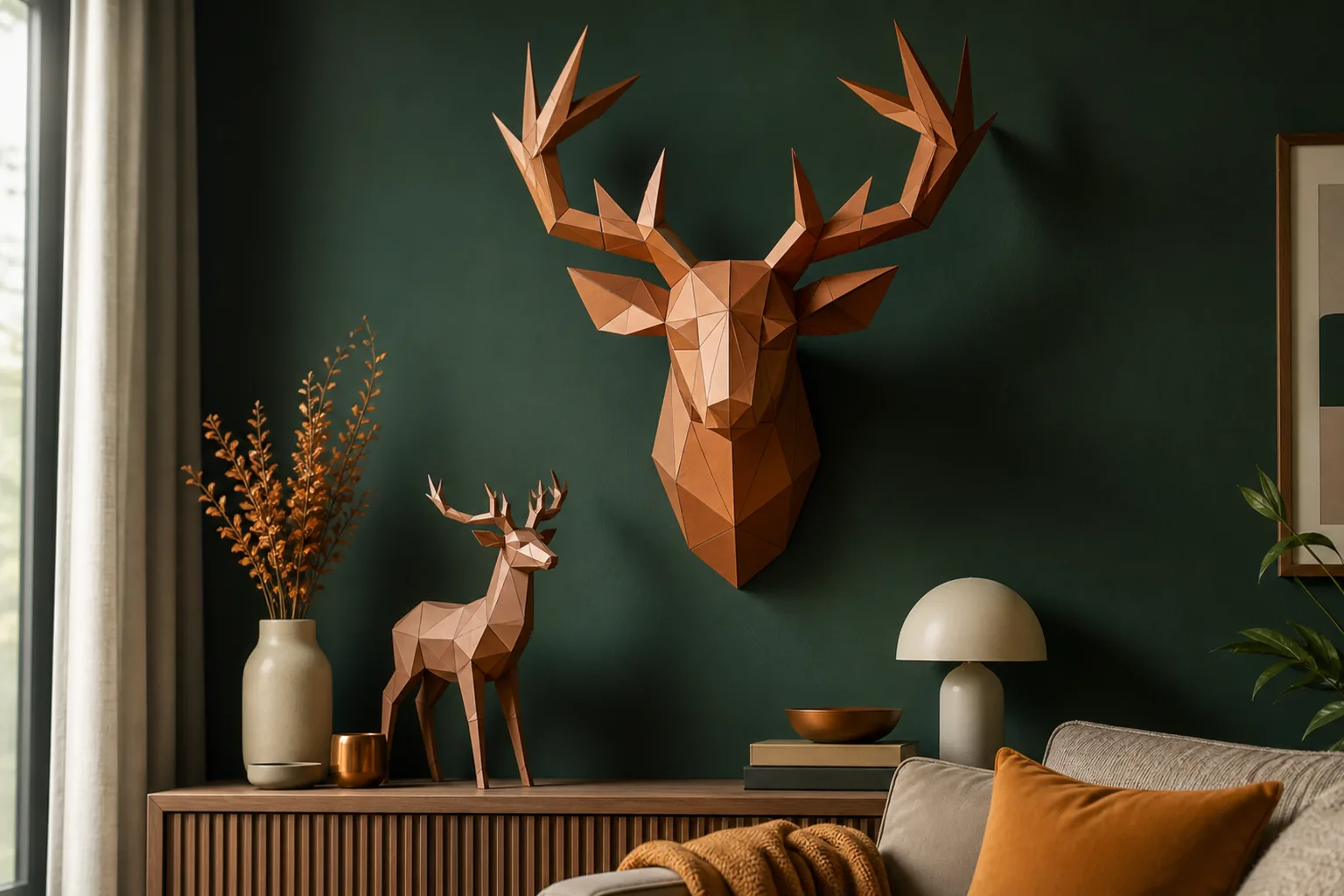
The deer is one of those shapes that never really goes out of style. In home décor, it brings together several visual codes people are actively looking for in 2026: geometric lines, a connection to nature, an instantly recognisable silhouette, and strong wall impact. Where a simple poster fills space without depth, a deer papercraft adds volume, casts shadows, and draws the eye the second you walk into the room.
Its success also comes down to versatility. A deer head trophy works beautifully in a contemporary living room, a masculine office, a teen bedroom, a cosy cabin-style reading nook, or even a shop display. A standing deer, on the other hand, brings a softer, more sculptural presence to a shelf, console table, or low cabinet. And mask or antler crown versions open up more festive uses: photo shoots, seasonal décor, themed birthdays, or event styling.
Another reason for the hype: papercraft fits perfectly with the growing desire for hands-on décor. People don’t just want to buy a finished object anymore - they want to take part in making it. Building a 3D paper deer means spending 1 to 4 hours creating something tangible, often on a budget between 6 € and 12 €. The visual impact / cost / satisfaction ratio is excellent. For many, it’s also the perfect gateway into creative hobbies, because the result looks far more impressive than a basic craft project.
Deer papercraft is also popular because it’s easy to customise. Print your template on white paper for a gallery-style look, on kraft for a natural feel, or in black or forest green for something more dramatic. And if you want to take it further, play with finishes: textured paper, subtle gold detailing on the antlers, a wooden backing, or soft indirect lighting behind the wall-mounted head.
If you’re just starting out, I also recommend checking our extra resources to save time and avoid classic mistakes: how to choose paper for papercraft and which adhesive to choose for papercraft. And if you love bold animal sculptures, our dinosaur papercraft guide shows just how powerful an iconic silhouette can be as a décor piece. The deer follows the same idea, with a more refined, more organic look that’s often easier to style at home.
The 10 best deer papercraft models to build
Origami deer head papercraft
Price: 10 € - Level: beginner to intermediate
If you want to start with the ultimate deer papercraft icon, this wall-mounted model is an excellent pick. The shape is instantly readable, with well-balanced antlers and enough volume to make an impact without feeling bulky. It’s the kind of creation that works just as well above a desk as it does in an entryway or living room. Assembly stays accessible as long as you’re careful with folds and alignment. Visually, it strikes the right balance between a reimagined trophy look and clean designer style. In white, it feels minimalist; in kraft, it feels warmer and more organic.
3D origami deer head papercraft
Price: 10 € - Level: intermediate
This type 2 version is ideal if you want a bolder deer head with more emphasis on the antlers. The finished look is highly decorative, almost sculptural, which makes it a great option if you want a true focal point in the room. The facets catch the light beautifully and give the final piece a more premium feel. Recommended if you’ve already built a small papercraft before, or if you’re comfortable with the patience and precision needed for the antler sections.
3D deer head papercraft
Price: 10 € - Level: intermediate
This model is perfect if you’re after a sharp, contemporary wall-mounted deer head. Its real strength is the finished look: it feels less like a simple DIY and more like a genuine design object. On a light-coloured wall, the edges create elegant relief and contrast. It works especially well in a modern cabin or Scandinavian-inspired interior. It’s also a strong creative gift idea: the subject has broad appeal, and the finished piece delivers instant visual impact even without any extra styling.
3D origami deer wall head papercraft
Price: 12 € - Level: intermediate to advanced
If you want a stronger wall presence, this 12 € version is a great choice. It’s for anyone looking for a central statement piece, with a more refined build and richer volume. The style stays understated, but the final assembly creates a more substantial wall sculpture. It’s the right model if you plan to install it above a sofa, bedhead, or dining nook. Styling tip: place it under soft side lighting to highlight the geometry of the facets.
Origami deer wall décor papercraft PDF
Price: 12 € - Level: beginner to intermediate
Want something specifically designed for wall display, with no doubt about the final use? This model fits the brief perfectly. It slips easily into a decorative composition with a mirror, slim shelves, or art prints. Its main strength is aesthetic flexibility: depending on the paper colour, it can feel rustic, chic, playful, or gallery-inspired. It’s also a practical option if you want to print and assemble a seasonal decoration quickly - for autumn, Christmas, or a cosy cabin mood.
3D deer papercraft emerging from the wall
Price: 10 € - Level: intermediate
This is one of the most interesting models if you want to break away from the classic trophy effect. The deer looks like it’s emerging from the wall, which creates a more dynamic, more modern result. It works brilliantly in an entryway, stairwell, or transitional space where the sculpture is seen from an angle. The perspective effect makes a real difference. In a contemporary interior, this kind of volume adds instant character without overwhelming the room. A great choice if you like objects that tell a story, not just static silhouettes.
Standing deer origami papercraft
Price: 6 € - Level: beginner
At 6 €, this is probably the best entry point if you want to try deer papercraft without pressure. The standing silhouette offers a completely different feel from a wall-mounted head: more poetic, softer, more like a shelf sculpture. You can place it on a bookcase, console, desk, or in a child’s bedroom. Since the budget is minimal, it’s also a great pick for a weekend creative session. If you’re a total beginner, this model helps you build confidence with mountain/valley folds, precise gluing, and overall assembly logic.
3D standing deer origami papercraft
Price: 12 € - Level: intermediate
This more developed standing deer version is ideal if you want a true full sculpture, with more presence and finer detail in the body. The final result looks great on a chest of drawers, inside a wall niche, or as the centrepiece of a styled table. This is the model to choose if you love forms that look good from multiple angles, because it stays interesting from the front and from the side. Paired with a wall-mounted head, it can create a cohesive mini collection around a forest, nature, or modern mountain theme.
3D origami deer head papercraft
Price: 12 € - Level: intermediate to advanced
If you’re looking for a more ambitious deer sculpture, this printable PDF definitely deserves a place on your shortlist. What makes it stand out is the stronger sense of volume and presence, with a very polished result if you take the time to sharpen the edges neatly. It’s the kind of papercraft that gets noticed straight away in a modern living room or creative workspace. Recommended if you’re no longer on your first build and want to level up the overall quality of the final result. A strong option for durable, confident décor.
3D origami deer antler crown papercraft
Price: 10 € - Level: beginner to intermediate
Not everyone wants a full wall trophy. This deer antler crown is an original alternative - visually lighter and very practical for party décor, a photo prop, or a subtler wall accent. It works especially well in a bedroom, studio, or seasonal setup around autumn and Christmas. You can build it in white paper for a snowy look, in kraft for a boho feel, or in coloured card for something more playful.
3D origami deer antler crown papercraft
Price: 10 € - Level: beginner to intermediate
This second crown version gives you another style option depending on the event or mood you’re aiming for. It can be used as wall décor, a photobooth accessory, shop display styling, or even the base for a lightweight costume. Its big advantage is the relatively quick assembly time compared with a full-size deer head. If you want a short but rewarding project, this is a very smart choice. It’s also especially popular for creative activities themed around nature, enchanted forest, or Nordic-inspired settings.
Origami deer mask papercraft
Price: 12 € - Level: intermediate
The deer mask goes beyond pure décor and adds an event-ready dimension. It’s an excellent choice for a costume party, photo shoot, performance, workshop, or a very original hanging decoration. Once assembled, it can also be displayed on the wall as an unusual sculptural piece. The final look depends a lot on assembly precision, but the finished effect is often spectacular for a very reasonable cost. If you love creative projects that work as both decoration and staging pieces, this one is absolutely worth considering.
Want to compare even more variations, explore other wall trophies, sculptures, and DIY models around the same theme? Browse the dedicated collection here: deer papercraft collection. You’ll find beginner-friendly models, larger wall-mounted versions, and plenty of deer décor ideas to match your own style.
How to choose your deer papercraft
Choose based on where it will go
Before you even look at difficulty level, ask yourself where your deer will live. On a main wall, go for a head or wall décor piece with a clean silhouette and clearly visible antlers. On a shelf or console, a standing deer will usually make more sense than a trophy. In a child’s room or office, a medium format avoids visual overload. Placement changes everything: a model that looks stunning in photos may feel too large - or too subtle - once it’s in your actual space.
Choose based on your real skill level
The classic mistake is choosing with your eyes instead of your hands. If you’re a beginner, start with a simple or budget-friendly model, like a standing deer. You’ll learn the core techniques: scoring, clean folding, tab gluing, and holding the shape together. Highly detailed wall-mounted heads with large antlers require more precision, because even small inaccuracies show up quickly in the symmetry. Better to succeed with an accessible model than lose motivation on something too ambitious.
Choose based on your décor style
A deer papercraft can tell very different visual stories. In matte white, it evokes contemporary design and pared-back interiors. In kraft or warm brown, it leans into a natural, cabin, or boho mood. In black, it becomes more theatrical. So look at your space: light wood, black metal, coloured walls, cocooning textiles, graphic prints… The right model is the one that speaks to the rest of your interior. A sharply angular wall head is perfect in a modern setting, while a standing deer often feels softer and more universal.
Choose based on build time
A small project that takes 45 minutes to 1 hour 30 doesn’t play the same role as a large sculpture that needs several hours. If you want a relaxing evening activity, go for a compact model. If you’re looking for a weekend project with a real wow effect, aim for a more developed wall head. Also think about your situation: building solo in peace, as a duo activity, in a workshop with a teen, or as a last-minute gift. Available time is often the smartest filter for making the right choice.
Choose the right paper and glue
The final result depends hugely on materials. For most models, paper between 160 and 250 g/m² gives you the best balance between rigidity and easy folding. Too thin, and it warps and loses structure; too thick, and it becomes frustrating to fold cleanly, especially in tight areas. For glue, a thin application of white glue or a paper glue with controlled setting time works well. If you want to go deeper, read our guide to choosing paper and our adhesive comparison.
Choose based on purpose: décor, gift, or event
Finally, define your goal. For a gift, choose a visually strong and widely appealing model, like a wall-mounted head. For an event, a mask or deer antler crown makes more sense. For everyday décor, go for a model that fits your room’s shapes and colours. This simple logic helps you avoid impulse buys. The best deer papercraft isn’t necessarily the most complex one - it’s the one you’ll actually build, display, and enjoy for a long time.
Tutorial: assemble it in 5 steps
1. Get your tools ready and print properly
Start by downloading the model and printing all pages at the intended scale, with no automatic resizing. Then prepare a flat work surface, good scissors or a precision craft knife, a metal ruler, a scoring tool, and suitable glue. If the template is numbered, sort the sheets in order. This phase prevents 80% of assembly mistakes: mixed pages, missing parts, reversed orientation, or the wrong paper weight.
2. Cut and score before folding
Cut the pieces neatly along the outlines, then score the fold lines before starting assembly. Scoring gives you crisp edges without breaking the paper fibres. It’s essential for a deer head with clean facets. Also identify valley and mountain folds if the template marks them differently. Spending 15 extra minutes here will save you a lot of time on the final fit.
3. Build small sub-assemblies
Don’t try to glue everything in one go. Instead, build modules: snout, forehead, ears, antler bases, neck, or body depending on the model. This method limits distortion and makes it easier to correct alignment. Apply a thin layer of glue to the tabs, hold for a few seconds, then let it set before moving on. Precision matters more than speed.
4. Assemble the main structure without forcing it
Once the sub-parts are ready, connect them progressively while checking symmetry each time. On a deer papercraft, the antlers and central facial line are the most sensitive areas. If a piece resists, don’t force it: check the number, fold direction, or assembly order. Forced gluing often creates tension that warps the whole model. Work calmly, using small amounts of glue.
5. Finish, reinforce, and install
Once the model is assembled, let it dry completely before handling. For a wall trophy, check the hanging point or add a light support on the back if needed. You can also reinforce certain hidden areas with a small paper strip. Finally, choose the right spot: a wall with low humidity, away from direct sunlight and out of high-contact areas. That will noticeably extend the life of your creation.
Styling ideas / display inspiration
The real potential of deer papercraft comes alive when it’s styled properly. With a few simple choices, you can turn a solid build into a true visual signature. The goal isn’t to overdo it, but to create a coherent setting around the piece.
- Contemporary cabin living room: place a white deer head above a grey sofa, with pale wood, off-white throws, and warm indirect lighting.
- Graphic entryway: position a deer emerging from the wall opposite the door for instant impact, paired with a round mirror and a minimalist console.
- Nature-inspired kids’ room: use a small standing deer on a shelf with illustrated books, sage and beige tones, and a few rattan accents.
- Party decoration: combine a deer antler crown, string lights, and dried foliage for a birthday setup or a winter table.
- Creative office corner: pair a paper wall trophy with typographic prints, a matte black lamp, and kraft accessories for a studio-style vibe.
You can also mix your deer with other paper creations to build a complete visual world. If you love dimensional, artistic forms, explore our inspiration around paper art to enrich your styling without losing visual coherence.
Frequently asked questions
Is deer papercraft suitable for beginners?
Yes, as long as you choose the right model. A simple standing deer or an easy wall décor design is much better for starting out than a large head with complex antlers. If you’re patient and methodical, beginner level is absolutely realistic.
What paper should you use for a wall-mounted deer trophy?
In most cases, paper between 160 and 250 g/m² offers the best compromise. Below that, the structure won’t hold well. Above that, folding becomes harder. For a clean result, choose quality smooth or lightly textured paper.
How long does it take to assemble a deer papercraft?
Depending on the model, expect anywhere from about 45 minutes to 4 hours. Smaller formats and crowns are quicker, while large wall-mounted heads require more cutting, folding, and fitting.
Can you hang a paper deer head on the wall long term?
Yes, if it’s properly assembled and installed in a dry area away from knocks and direct sunlight. Depending on the model, you can use light mounting putty, a small hook, or a discreet hanging system added to the back.
What glue gives the best result?
A white paper glue applied in a thin layer works very well. The key is avoiding excess glue, which can warp the paper and dirty the edges. A medium-setting glue gives you enough time to adjust the pieces correctly.
Is it a good gift idea?
Yes, especially for someone who loves décor, creative hobbies, or original objects. You can offer the file/kit to assemble, or build it yourself and give a personalised decorative piece made with real care.
What’s the difference between a wall-mounted head and a standing deer?
The wall-mounted head creates stronger visual impact and works as a focal point. The standing deer feels softer, is easier to place on furniture, and is often simpler to move around. The choice mainly depends on the space and the effect you want.
How do you avoid a crooked or asymmetrical result?
Cut accurately, score before folding, glue in small sections, and check alignment often. On a deer, facial symmetry and antler balance are essential. It’s much better to go slowly than rush to the finish.
Conclusion - where should you start?
If you want one simple piece of advice: start by defining the purpose. For a striking wall feature, go for a deer head. For a shelf or a first attempt, choose a standing deer. For a more playful or event-based project, an antler crown or mask is perfect. Deer papercraft has a rare advantage: it can look spectacular without being inaccessible, decorative without costing much, and varied enough to suit both beginners and serious DIY fans. With the right model, the right paper, and a little time, you end up with a piece that has depth, style, and a real story behind it - because you built it yourself.
Ready to create your own deer papercraft? Pick your model, print, assemble, and transform your interior with 3D décor that feels truly personal. Shop our DIY templates now on Papercraft-3D.com with an automatic 10% off and free delivery from 50 €.