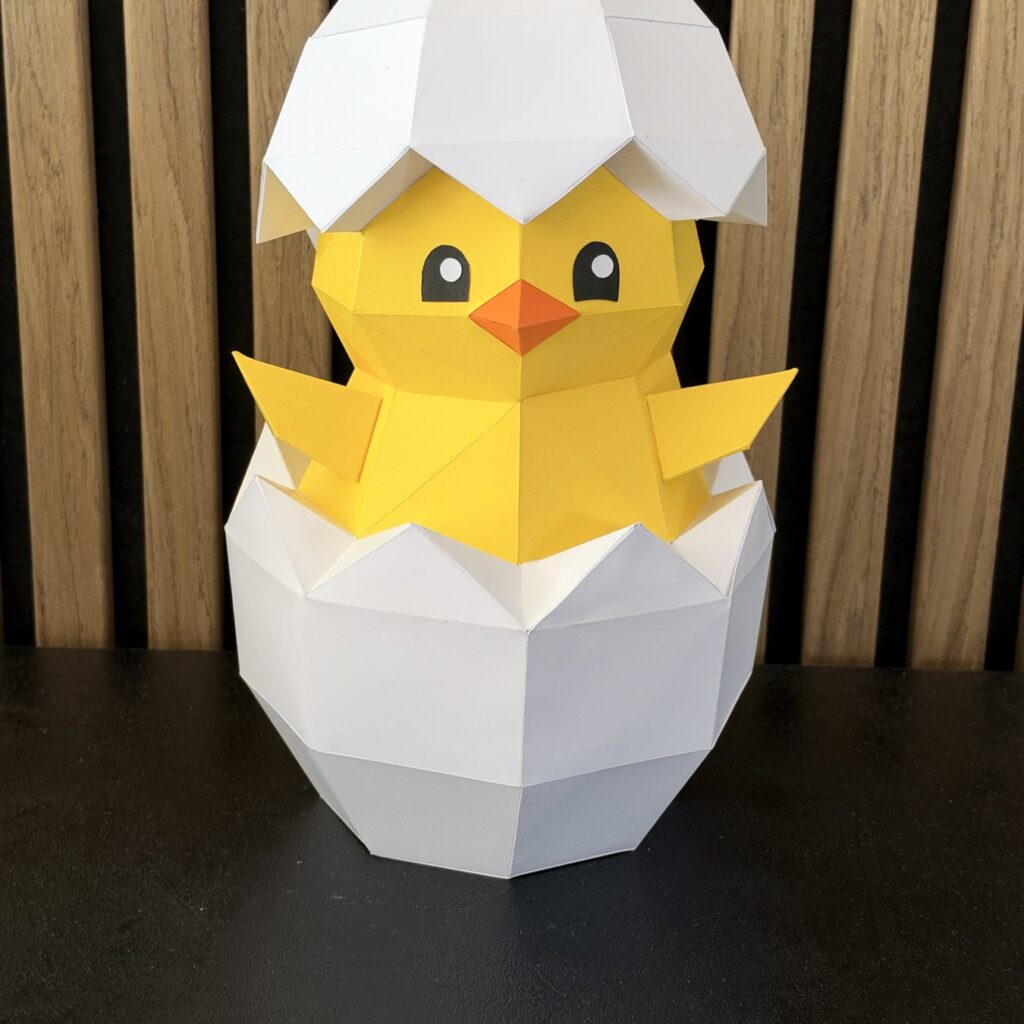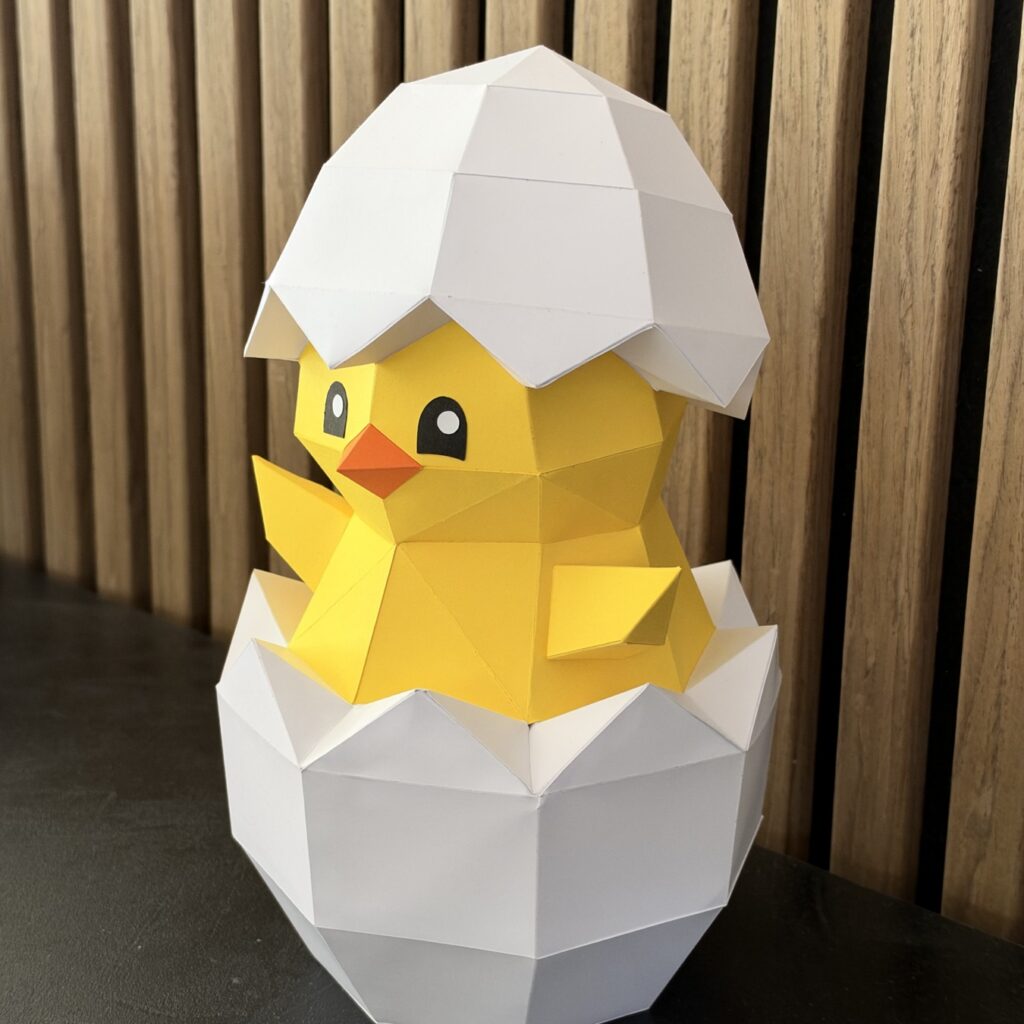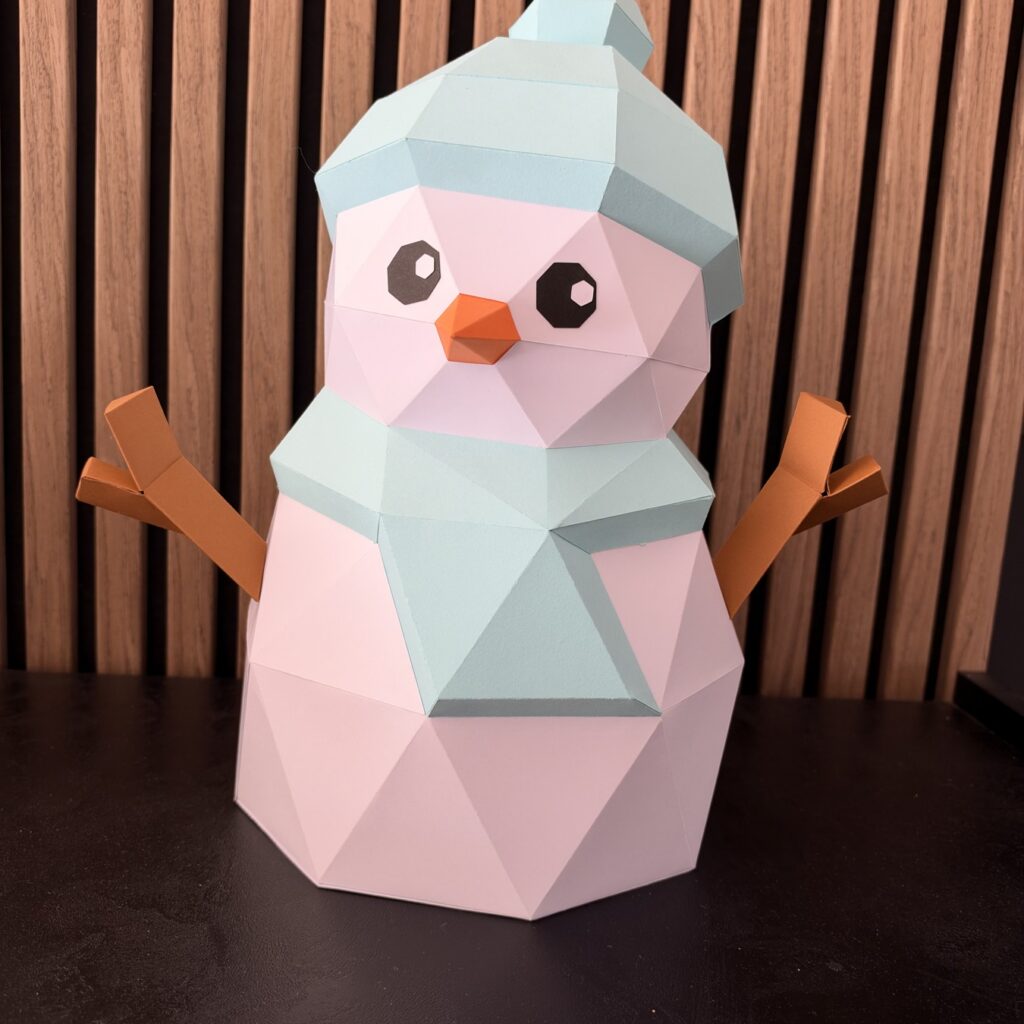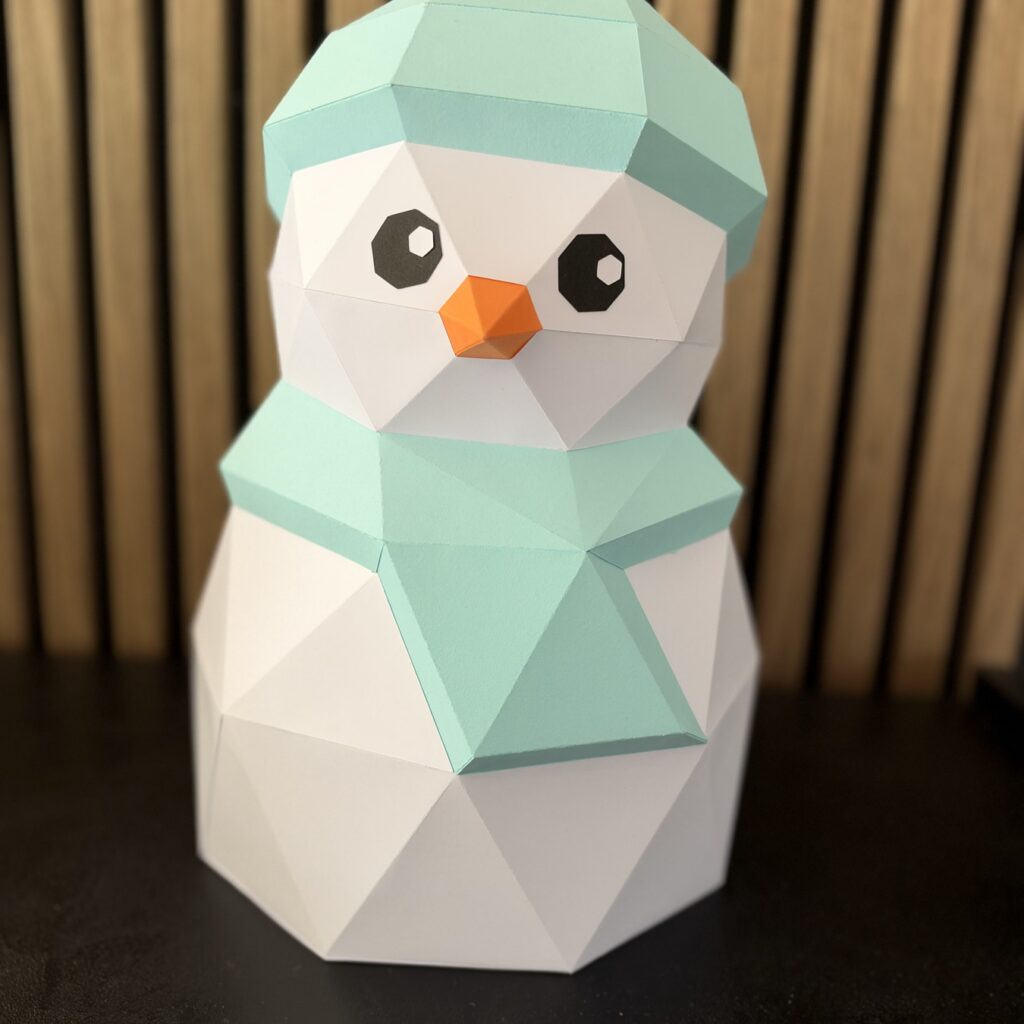
3D papercraft fascinates with its ability to transform simple sheets of paper into geometric sculptures, low poly animals, masks, or spectacular decorative objects. But behind a clean, professional-looking result, there is often one decisive detail: choosing the right adhesive. In this creative hobby, glue that is too runny can warp the paper, a bond that sets too slowly can make assembly more difficult, and adhesive that shows too much can ruin the final look. In other words, the success of a model depends just as much on cutting and folding as it does on the quality of the bond.
Whether you are a beginner or an experienced enthusiast, choosing the right glue for 3D papercraft helps you gain precision, comfort, and durability. Some projects require instant bonding, while others need a bit of flexibility to reposition tabs. There are also very effective alternatives to liquid glue, such as double-sided tape, which is especially valued for its clean application. Here is a complete guide to understanding the differences between the main adhesives, avoiding common mistakes, and finding the solution best suited to your paper creations.
The importance of choosing the right glue in 3D papercraft
3D papercraft involves assembling many pieces, sometimes tiny, often delicate, and almost always meant to fit together with precision. In this context, glue does more than simply hold parts together: it directly affects the quality of the final result. An unsuitable glue can soak through the paper, leave shiny marks, cause warping, or make certain areas too stiff.
On the other hand, a well-chosen adhesive makes assembly easier, reduces stress during the build, and improves the durability of the finished object. This is especially important for large creations, hanging models, wall trophies, or pieces meant to be handled. The right product should offer a balance between precision, drying time, transparency, and paper-friendliness.
The type of paper used also plays a major role. Lightweight 120 gsm paper does not react the same way as cardstock weighing 200 or 250 gsm. The lighter the paper, the more important it is to avoid overly wet glues. The larger the structure, the more essential a strong bond becomes. That is why it is useful to know the main options before starting a project.
In practice, there is no single perfect universal glue for every use. The best choice depends on the type of model, the level of detail, your experience, and the result you want. That is exactly why this topic matters so much to all fans of paper crafting.
How to choose the right adhesive for your project
Before buying a glue or adhesive tape, it helps to ask yourself a few simple questions. Are you working on a small decorative model or a large sculpture? Do you need to reposition parts? Will the adhesive be visible? Are you looking for a clean solution for crafting with children? These criteria naturally point you toward the right product.
For a complex model with many narrow tabs, a precision glue with a fine tip is often the better choice. For flat surfaces or visible areas, double-sided tape can provide a cleaner finish. For a quick project or a family activity, a simple, washable, non-toxic glue may be enough.
Here are the main criteria to consider:
- Application precision: essential for small pieces and tight angles.
- Setting time: a fast-setting adhesive speeds up assembly, but leaves less room for adjustment.
- Clear drying: important for avoiding visible marks along the edges.
- Compatibility with paper weight: some adhesives work better with heavier paper.
- Clean application: a key point for display pieces or carefully finished projects.
- Safety: especially important for creative workshops with children.
Once you keep these criteria in mind, it becomes much easier to compare the available options and choose the adhesive best suited to your 3D papercraft practice.
Aleene’s Tacky Glue: versatile and worth discovering
Among the recommended products, Aleene’s Tacky Glue stands out as a staple in any papercrafter’s toolkit. Why? Mainly because of its pen-style applicator, which allows for unmatched precision that is vital for reaching hard-to-access corners. In addition, the formula dries quickly, significantly reducing waiting time between each glued section, and its non-toxic nature makes it ideal for family projects.
This glue is especially appreciated for models with lots of small tabs. It lets you apply just the right amount of product, which limits smudging and excess moisture. For fans of low poly papercraft, this is a real advantage, since edges need to stay crisp and surfaces clean.
However, while Aleene’s offers reduced waiting time thanks to its quick drying, that speed also means there is little room for error when positioning parts. This means you need to be especially careful to avoid mistakes that could compromise the result. Overall, this glue is an excellent choice for those looking for efficiency and safety.
Another strong point is its versatility. It works well for both small assemblies and more ambitious projects, as long as you work methodically. For many enthusiasts, it represents a very good balance between ease of use, clean application, and strength.
Cosmic Shimmer Glue: for advanced use
When assembling larger structures or aiming for a particularly discreet bond, Cosmic Shimmer Glue deserves your full attention. This glue is often cited among the best options for demanding makers, especially thanks to its precision tip and its clear finish once dry.
For those working on projects that require a strong, durable bond, Cosmic Shimmer Glue is an appealing solution. Equipped with a precise nozzle, it allows you to handle all the intricate joins required by certain three-dimensional designs with finesse. Its ability to dry transparent ensures discretion and cleanliness, two qualities highly valued by purists of this craft.
This glue is often used for more technical creations, where you want to prevent pieces from coming loose over time. It can be especially useful for parts under slight tension, such as curves, large panels, or volumetric assemblies.
That said, this glue does require a certain level of experience, as it needs partial drying before use, making the process less intuitive for beginners. Its sensitivity to low temperatures can also make it harder to use in winter. Even so, its strong bonding power outweighs these practical constraints and remains hard to beat for heavy or large-scale pieces.
If you already have a few projects under your belt and want to improve the quality of your finishes, Cosmic Shimmer Glue can clearly take your creations to the next level.
Double-sided tape: the discreet but formidable ally of 3D papercraft
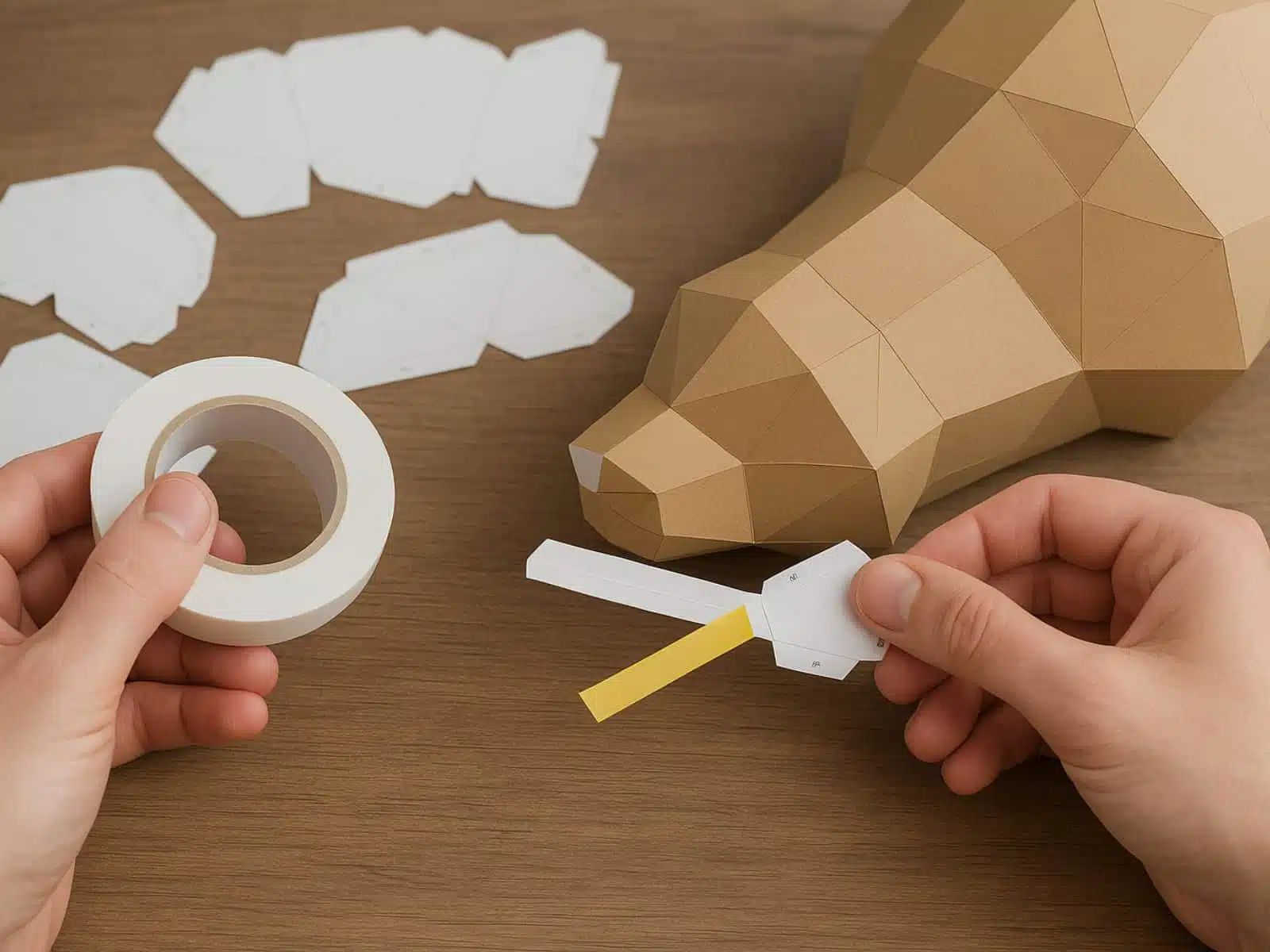
In the world of 3D papercraft, where every fold matters and part alignment needs to be nearly perfect, double-sided tape stands out for its ease of use and immediate effectiveness. Unlike liquid glues, which require drying time - sometimes leading to imprecision or smudging - double-sided tape provides instant adhesion, with no waiting and no overflow. Its clean, dry application allows for fast, mess-free work, ideal for thin parts or visible areas. Another advantage: it prevents paper from warping, preserving the precision of low poly shapes. For flat elements, quick fixes, or areas that need to stay neat, it is a remarkably practical solution, especially for children or beginners. Compact, silent, and odorless, it quickly becomes an essential part of any papercraft kit, ready to slip between two cut lines.
This type of adhesive is especially relevant for makers who prioritize cleanliness and speed. It is also very useful when working in batches, on several identical elements, or when you want to avoid any waiting time between steps. On the other hand, it requires precise placement, since repositioning is often limited once the piece is stuck down.
To get the best out of double-sided adhesive tape, it is best reserved for sufficiently flat surfaces and areas where you can apply light pressure during assembly. Used properly, it becomes an ideal complement to liquid glues.
Budget-friendly alternatives: is Elmer’s a safe bet?
After looking at more specialized solutions, it is only natural to wonder whether there are more affordable options for beginners or for crafting on a budget. Elmer’s is one of the best-known names in this category.
Elmer’s is another very well-known option among paper craft enthusiasts. Available both online and in many physical stores, it stands out for its cost-effectiveness. Washable and non-toxic, it meets basic expectations well, especially for projects involving children or beginners who are not looking for professional-level results.
Its main appeal lies in its simplicity. For learning the basics of papercraft assembly, testing templates, or doing occasional projects, it can be perfectly suitable. It allows you to get used to gluing techniques without immediately investing in more technical products.
Although this glue does not come with the specialized applicators offered by some brands focused on papercrafting, it still holds its own for those who prefer straightforward simplicity. Certain packaging options can even help offset this limitation, making it easier to take advantage of its broader benefits.
In short, Elmer’s may not be the highest-performing glue for highly detailed projects, but it remains a credible solution for small budgets, testing, and occasional use.
Other options: which ones are really worth considering?
The market for craft adhesives is broad, and several products can be useful depending on your needs. Some are very practical for specific uses, while others are better reserved for occasional situations.
- Pritt Stick: A classic choice thanks to its washable, solvent-free formula, suitable for simple projects that need to be done quickly.
- Mod Podge: Used not only as a glue but also as a protective sealer, it adds long-lasting protection and durability to your creations.
- UHU Super Glue: Suitable for permanent bonds, ideal for especially sturdy projects or pieces subject to frequent handling.
Each type of glue has its own characteristics and best uses, so choosing the wrong one can lead to disappointing results. Thinking in terms of the right tool for the right job is highly recommended if you want to tailor the experience effectively.
That said, these options need to be considered according to the intended use. A glue stick like Pritt Stick may work for simple parts, but it often lacks the strength needed for complex 3D structures. Mod Podge can be interesting if you also want to protect the surface, but it should be applied lightly so the paper does not become overly damp. As for a very strong glue like UHU Super Glue, it must be handled with care: its fast bond and rigidity leave little room for mistakes.
The most important thing, then, is not to look for a single solution that does everything, but to match the adhesive to the type of assembly and the level of finish you want.
Common mistakes to avoid with glue in papercraft
Even with a good product, certain mistakes can compromise the final result. In 3D papercraft, precision matters just as much as patience. A small gluing mistake can create visible misalignment across several faces of the model.
The first mistake is applying too much glue. Many people think that using more adhesive guarantees a stronger hold. In reality, excess glue mostly causes smudging, longer drying times, and paper warping. A thin, evenly spread layer is far better than an overly generous application.
Another common mistake is gluing too quickly without first checking the fit. Before applying adhesive, it is a good idea to do a dry fit to verify the orientation of the parts. This helps avoid reversed pieces, misplaced folds, or tabs glued on the wrong side.
It is also important not to ignore the setting time. Some glues require a few seconds of pressure to ensure a proper bond. If you let go too soon, the parts may lift slightly and create an alignment defect.
Finally, many beginners forget to clean the nozzle or close their glue properly. The result: the product dries out, clogs, or becomes difficult to dispense. Minimal maintenance is enough to extend its lifespan and preserve precise application.
Which adhesive should you use depending on the paper and model type?
Not all 3D papercraft projects are the same, and neither are all papers. Matching the adhesive to the material is an excellent way to achieve a cleaner, more durable assembly.
For lightweight paper, between 120 and 160 gsm, it is better to choose a low-moisture glue or thin double-sided tape. This helps limit the risk of warping. With this kind of paper, precision is essential because the material marks easily.
For heavier paper, between 180 and 250 gsm, a good-quality fast-setting liquid glue often delivers very good results. The material handles moisture better and allows for a strong bond, which is especially useful for wall sculptures, animal trophies, or large decorative objects.
Highly detailed models with many small tabs generally benefit from a glue with a fine tip. Geometric models with large flat surfaces, on the other hand, can take advantage of the efficiency of double-sided tape. For creations meant to be gifted or displayed, discreet bonding becomes a top priority.
Clearly, the best adhesive is often the one that matches both the paper weight, the complexity of the template, and your own way of working.
Key tips for getting the best results with glue
To achieve a clean, strong, and enjoyable build, a few good habits make all the difference. They can immediately improve the quality of your assemblies, whatever adhesive you use.
| Criterion | Usage tip |
|---|---|
| Precision | Keep toothpicks or fine brushes on hand to spread the adhesive exactly where needed. |
| Drying time | Prepare all the sections of the project before applying glue to speed up the process. |
| Storage | Always store adhesives in a temperate place to limit damage caused by climate variations. |
| Compatibility | Always check compatibility with your materials for each type of glue to avoid cracks or unexpected wear. |
To these tips, you can add a few very useful habits: work on a clean surface, wipe away excess glue immediately, and hold tabs in place for a few seconds with your fingers or soft tweezers if needed. For longer projects, it can also be wise to alternate between liquid glue and double-sided adhesive depending on the area.
A solid understanding of the different types of glue and their specific uses makes all the difference when creating high-quality papercraft pieces. Now it is your turn to combine creativity and precision to enhance every creation, whether it finds a place in your home or is displayed to impress those around you.
FAQ: everything you need to know about glue for 3D papercraft
What is the best glue for getting started in 3D papercraft?
For beginners, the ideal choice is a non-toxic glue that is easy to control and fairly forgiving. A glue like Aleene’s Tacky Glue is often appreciated for its precision, while a simpler glue like Elmer’s can work well for learning the basics. If you want to avoid smudging, double-sided tape is also an excellent option for getting started with confidence.
Can double-sided tape completely replace glue?
Not always. Double-sided tape is extremely effective for flat surfaces, clean assemblies, and quick bonding. However, for certain curved areas, small complex tabs, or volumes that require more flexibility, a precision liquid glue is often better suited. In many cases, the best approach is to combine both depending on the project.
How can you prevent paper from warping during gluing?
Warping usually happens when too much glue is applied or when a product that is too wet is used on thin paper. To avoid it, apply a very small amount of adhesive, spread it evenly, and use double-sided adhesive tape if needed. Using paper with a weight suitable for papercraft also helps a lot.
Is a strong adhesive like super glue recommended?
It can be useful in a few very specific cases, but it is not always ideal for 3D papercraft. Very strong glues set quickly, leave little room for error, and can make the paper excessively rigid. They are therefore best reserved for special assemblies rather than general use on paper models.
How long can papercraft glue be stored?
That depends on the brand and storage conditions, but a glue that is properly sealed, kept at a stable temperature, and protected from freezing can remain usable for several months. To preserve its quality, clean the nozzle regularly and avoid temperature fluctuations. A glue that has thickened, separated, or become difficult to apply should be replaced to maintain a precise and clean bond.
Ready to get started?
Want to try without spending a cent? Download our free printable papercraft models. For a flawless result, grab our printed color paper kit (glossy paper).
You may also like: how to assemble a papercraft model step by step, printable paper mask templates.