| Main idea | Details |
|---|---|
| Choice of paper | A crucial factor that influences both aesthetics and ease of handling. |
| Paper for beginners | Kami paper is the most affordable and colorful paper for beginners. |
| Advanced paper | Explore Washi for durability and a unique aesthetic. |
| Folding techniques | Learn basic and advanced folds to improve your skills. |
Origami, the Japanese art of paper folding, appeals to a wide audience thanks to its apparent simplicity and the sheer variety of what can be created. The quality of the finished piece, however, largely depends on the choice of paper. This guide explores the different types of paper available and offers advice on choosing the ideal paper for your origami projects, whether simple or complex.
Ordinary paper
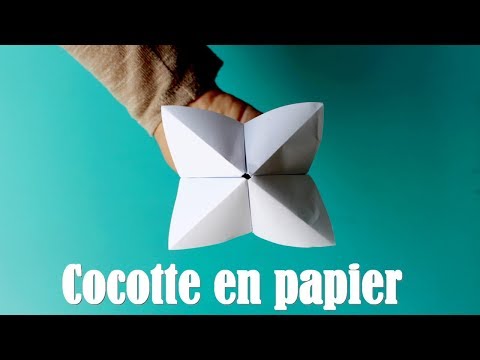
Before delving into the specific types of paper, it is worth knowing what the starter options are for any origami enthusiast. Kami paper, often used by beginners, is lightweight and comes in a wide range of colors. It is an affordable choice for those just starting out. For anyone looking for a little more sturdiness without breaking the bank, kraft paper is a great alternative. Its natural brown color does, however, limit the aesthetic possibilities unless you treat it further or use paint and markers.
The choice of paper affects not only the appearance of origami but also the way it folds. Here is a list of commonly used types of paper:
- Kami paper: Lightweight and colorful, ideal for beginners.
- Kraft paper: Durable and inexpensive, but less attractive.
- Printer paper: Accessible and versatile, although not very traditional.
Each type of paper has its pros and cons. The choice therefore depends on your project and your personal preferences. To learn more about basic origami techniques, you can check out “How do I make origami easily: a step-by-step guide for beginners”.
Specialty origami paper
Besides the usual types of paper, there are also special papers designed specifically for advanced folders or for those who want to create origami with a particular aesthetic. Washi paper, which originally comes from Japan, stands out for its exceptional strength and unique texture, making precise and long-lasting folds possible. Its higher price reflects the superior quality and the traditional patterns.
Here are a few types of paper used for origami:
- Washi paper: Traditional and durable, perfect for delicate work.
- Tant paper: Offers a wide range of colors and is suitable for various folds.
- Metallic paper: Gives your creations a unique shine.
- Lokta paper: This paper from Nepal is durable and has a distinctive texture.
The choice of paper can turn a simple fold into a true work of art. For tips on how to harden origami paper and make your creations sturdier, take a look at “How to harden origami paper: essential techniques and tips”.
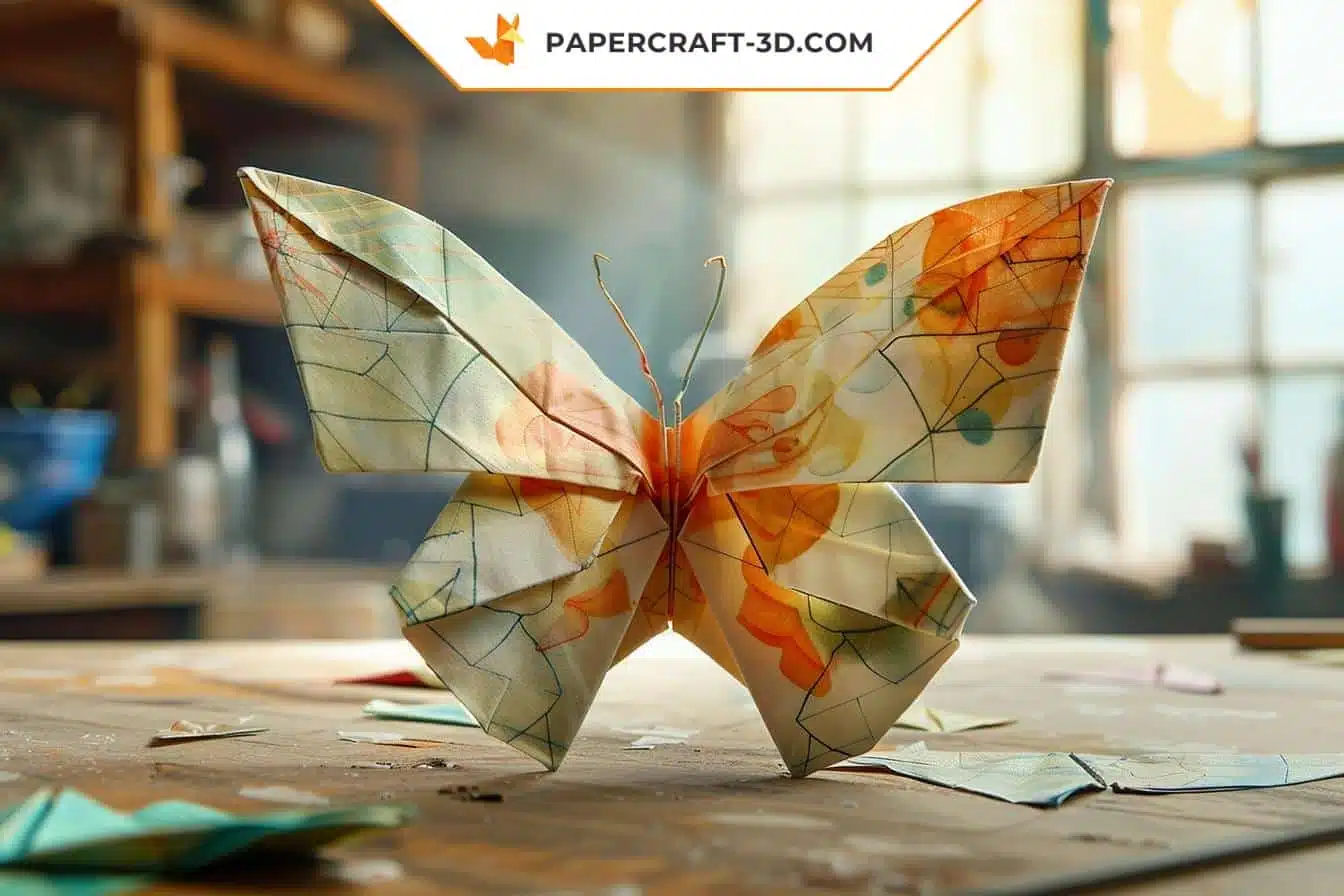
Five origami techniques every folder should know
Mastering certain basic techniques can greatly enrich your origami practice. Here are five essential techniques:
- The valley fold: Fundamental - here you fold the paper towards you.
- The mountain fold: The opposite of the valley fold, this one folds away from you.
- The reverse fold: A step further, used to change the direction of a fold.
- The bird base: the starting point for many animal models.
- Action folds: Making origami that can move.
With the different types of paper and a knowledge of various folding techniques, you can create ever more impressive origami. For those interested in other forms of paper folding, such as papercraft, discover “Which paper should you choose for papercraft? A complete guide to the best types of paper”.
| Type of paper | Specifications | Recommended use |
|---|---|---|
| Kami paper | Light, colorful | Beginners, daily practice |
| Washi paper | Traditional, textured | Fine art, gifts |
| Metallic paper | Shiny, stiff | Art projects, decorations |
Each type of paper is a world of its own, offering endless creative possibilities. Whether you are just beginning to explore the art of origami or want to perfect your techniques, the most important thing is to choose the right paper for your project. With the right materials and a little patience, origami is an inexhaustible source of satisfaction and beauty.
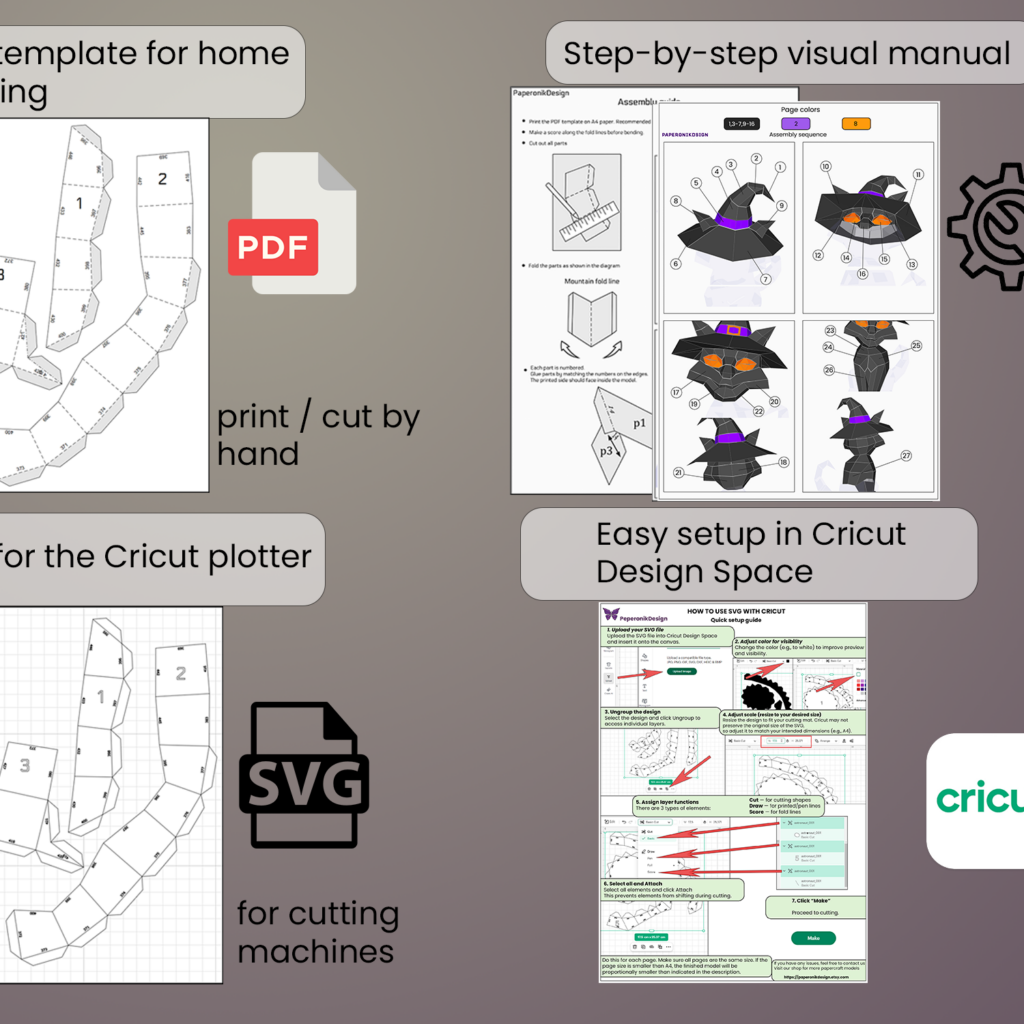
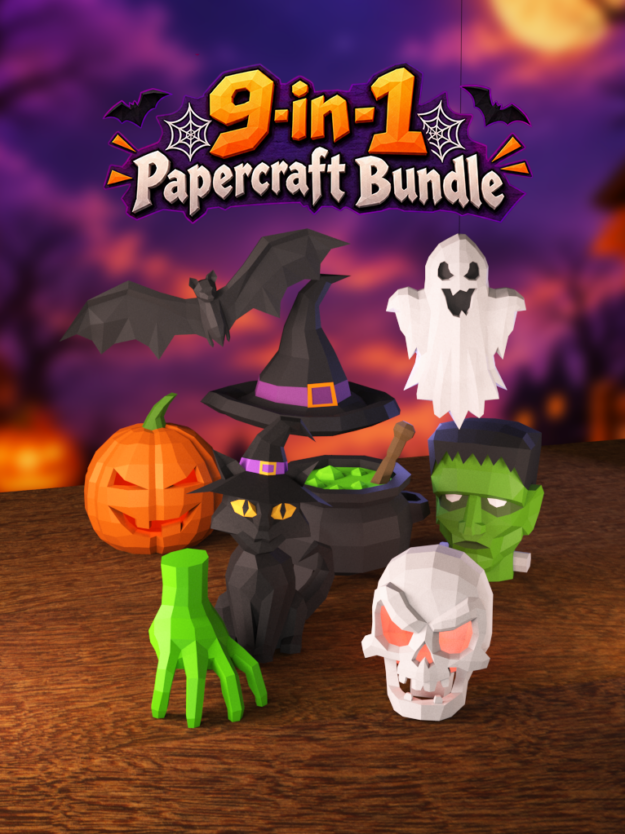
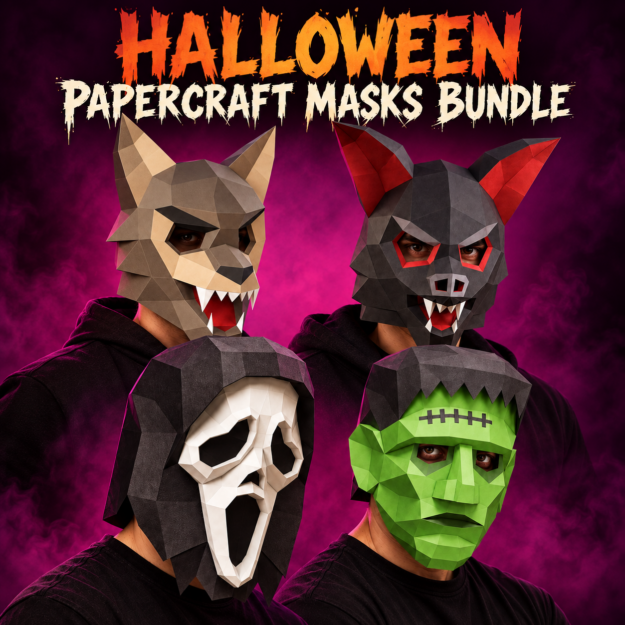
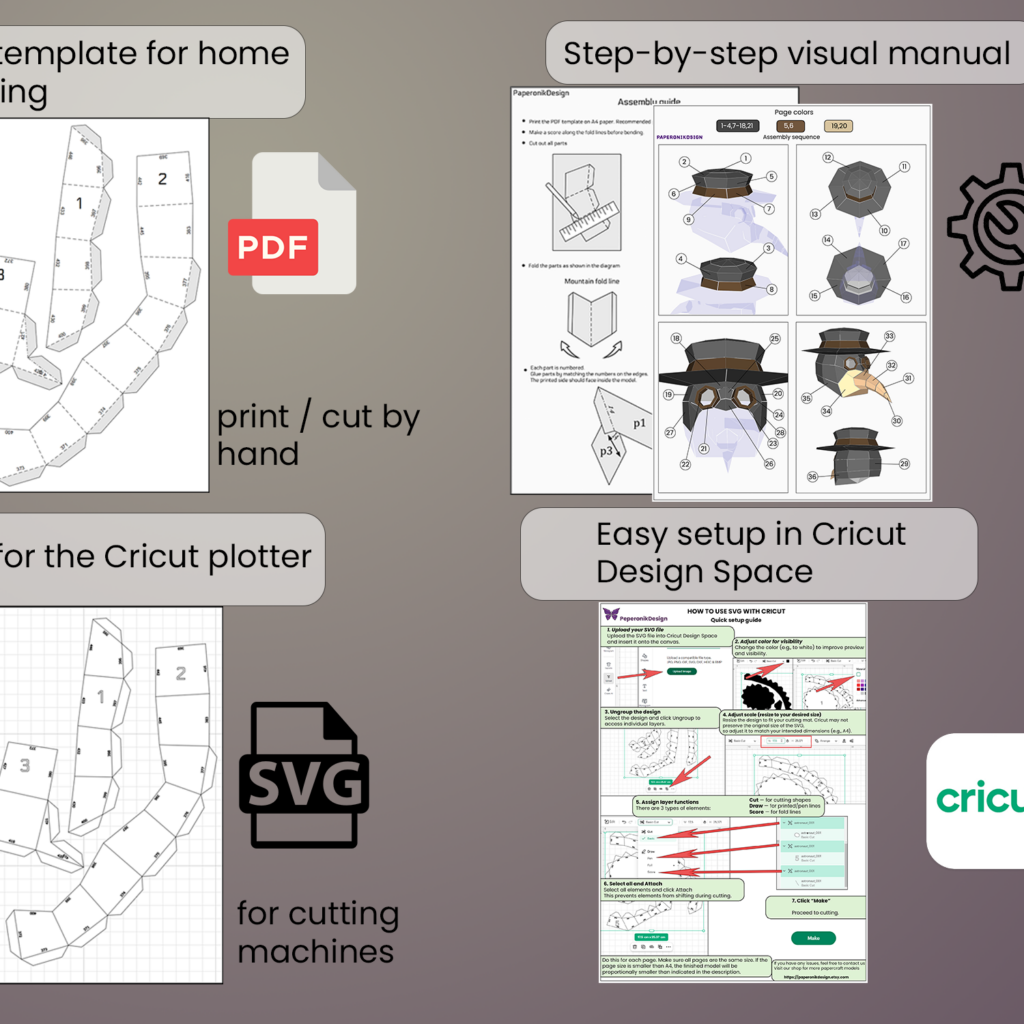
The next step is the paper itself: pick a model from our free papercraft to print or download our downloadable PDF papercraft kit.