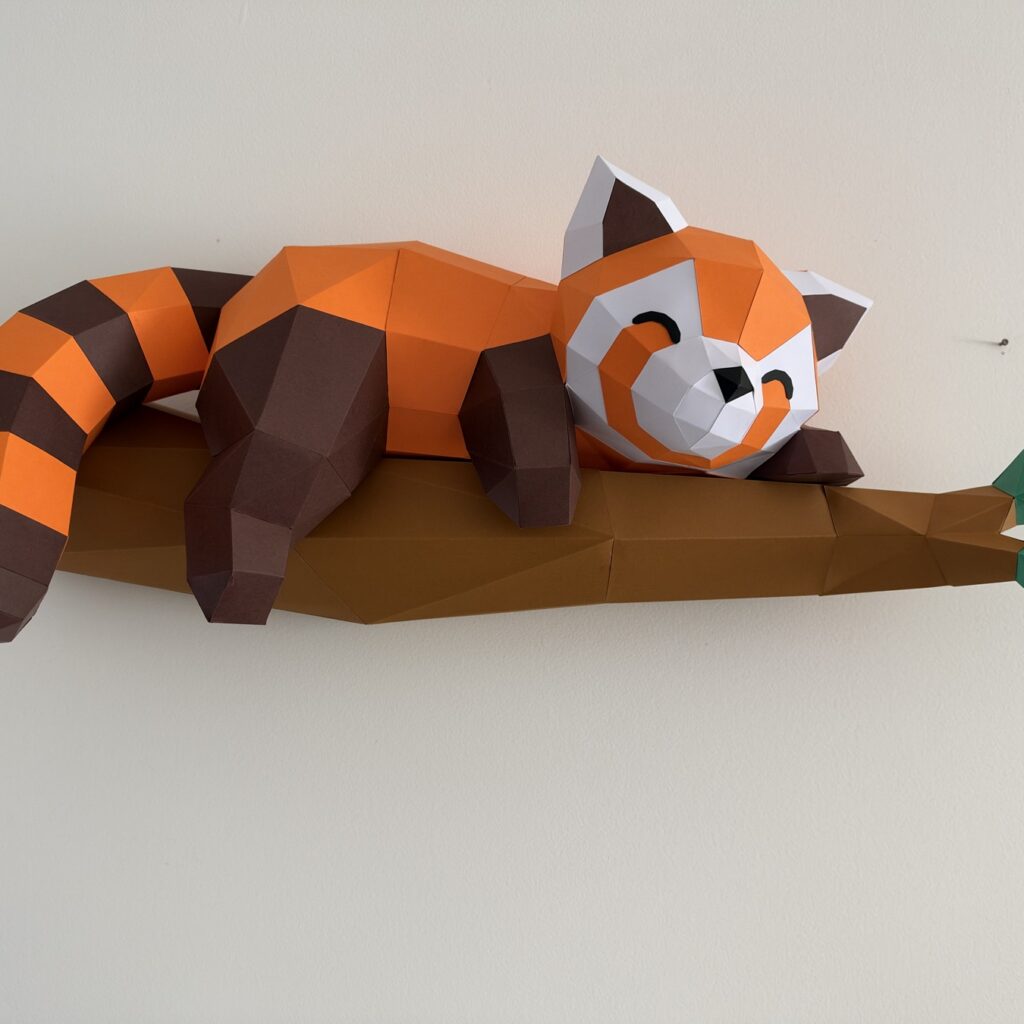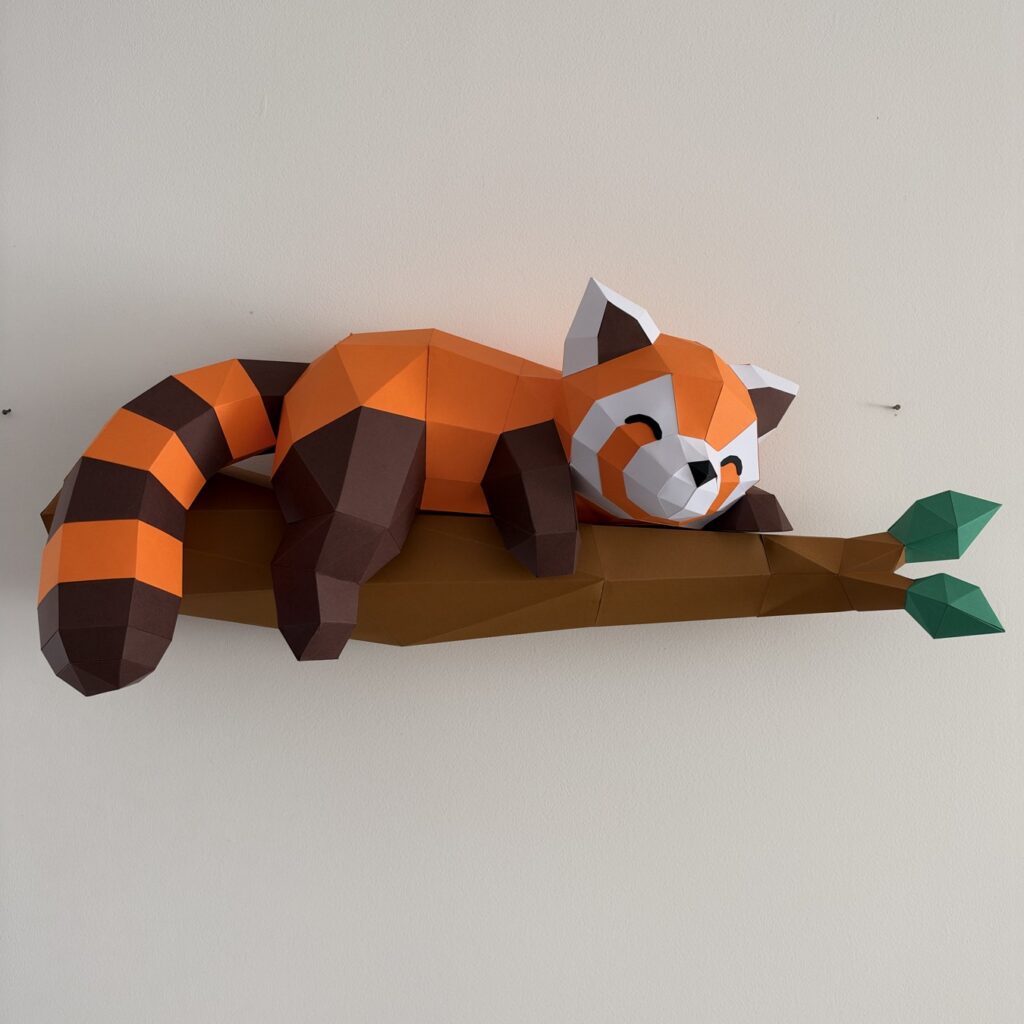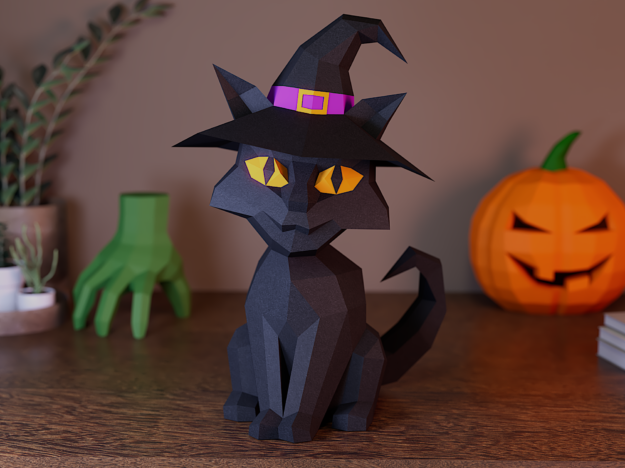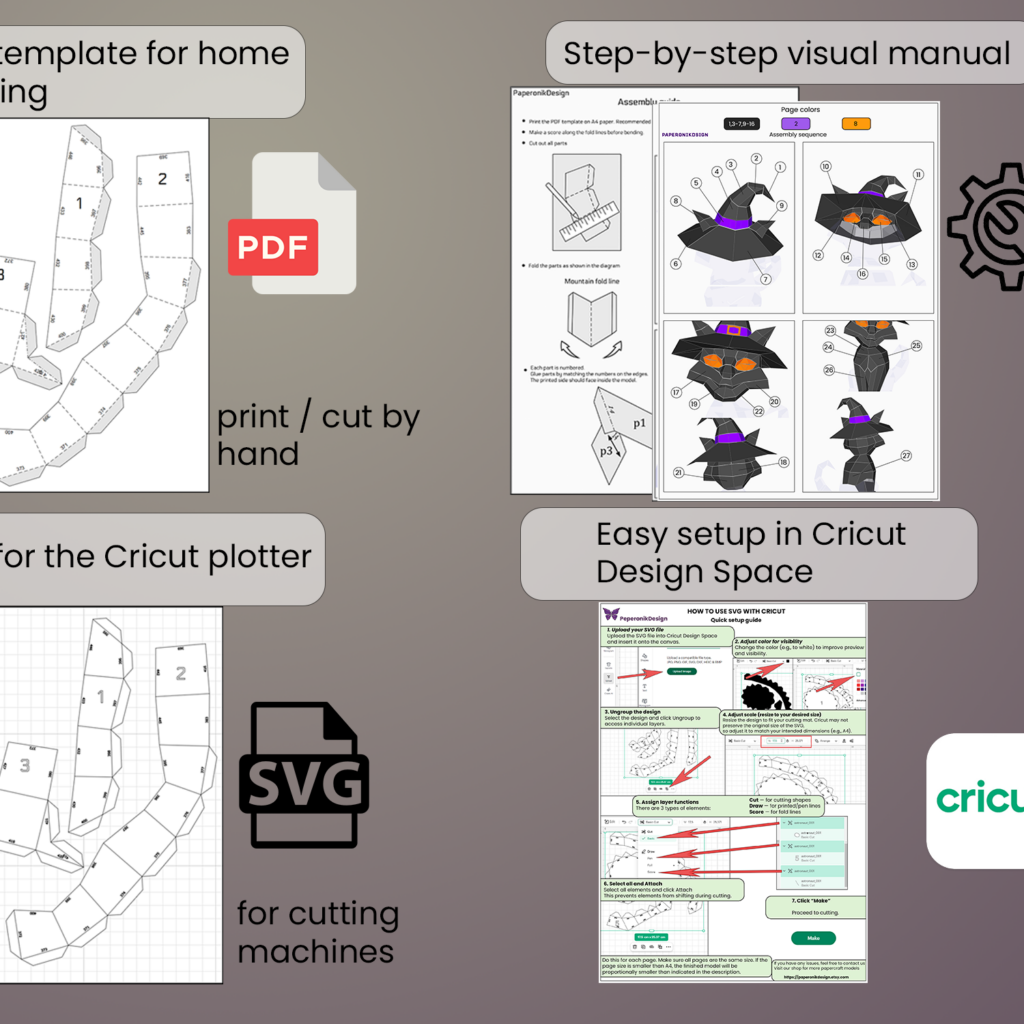
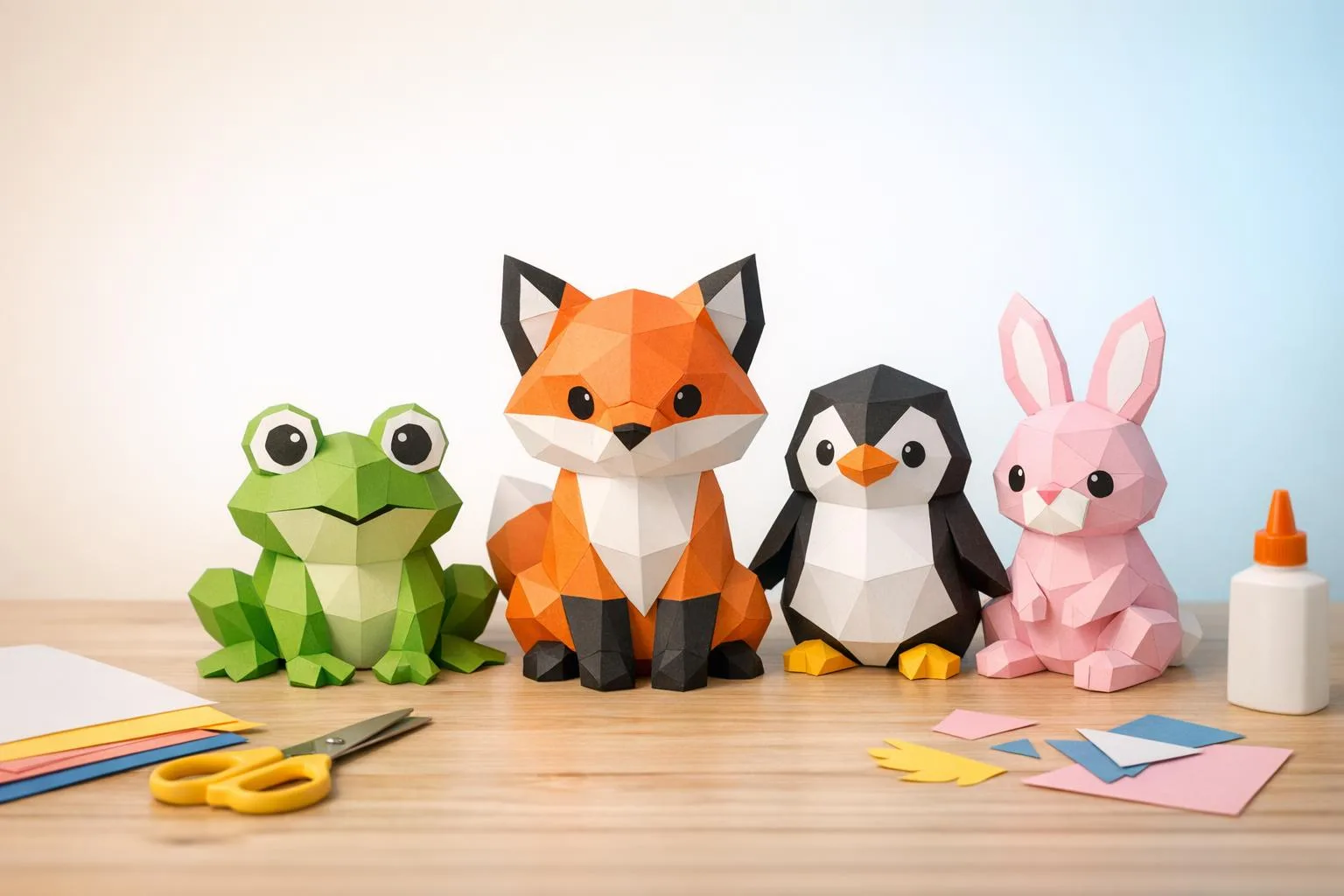
Looking for a papercraft kit for kids that truly matches your child’s age - or your next creative family session? You’re in the right place. The secret isn’t picking “the cutest model,” but finding the right balance between cutting, folding, gluing, attention span, and that final sense of pride. Ages 5 to 8 do best with simple, rewarding shapes. Ages 9 to 12 can handle more precision. From 13+, you can move into more decorative projects that require extra patience. In this guide, you’ll discover why kids’ papercraft is booming in 2026, our top kits by age group, the key criteria for choosing well, a 5-step tutorial for a smooth build, plus décor ideas and a practical FAQ to help you avoid the usual mistakes.

Why kids’ papercraft is booming in 2026
In 2026, papercraft for kids is no longer just a simple midweek activity. It answers several very current needs: slowing down, working with your hands, creating without screens, and decorating a bedroom with something you made yourself. That mix of hands-on fun, calm play, and a rewarding finished object is exactly why more and more families love it.
In practical terms, a good kids’ papercraft kit develops at least three skills at once. First, fine motor skills: folding on a line, applying glue without making a mess, lining up two tabs - these may look simple, but they’re genuinely useful. Then there’s focus: even a small model asks a child to follow a logical sequence, which helps them stay engaged for 20 to 60 minutes. Finally, there’s spatial awareness: turning a flat sheet into a 3D shape is a great introduction to construction and visual thinking.
Another reason for its success: papercraft adapts really well to age. At 5-8, it’s best to choose clear shapes, compact volumes, and some adult help. At 9-12, kids can be more independent, follow numbers, manage multiple steps, and aim for a neater finish. From 13+, you can pick models that call for more patience, precision, and a real desire for a beautiful result.
The décor side matters a lot too. A rocket on a shelf, a unicorn on a desk, a sun and cloud in a bedroom: the result stays on display for weeks, sometimes months. This isn’t a throwaway activity. That’s also why parents like these DIY kits: they’re affordable, calm, and the final object has real presence.
If you want to go deeper into the creative and decorative side of paper sculpture, also check out our article on paper art and origami. And to avoid frustrating assembly issues, our guides on how to choose paper for papercraft and which adhesive to choose for papercraft cover the basics really well - even for children’s kits.
In short, kids’ papercraft is thriving because it combines instant enjoyment, subtle learning, and a real finished result. And most importantly, there are now enough models available that you can choose not “just any kit,” but a kit that truly fits the child’s age and skill level.
11 of the best papercraft kits for kids to assemble
Here’s a selection organised by age group, with one simple goal: avoid overly ambitious models for younger kids while still offering kits that feel exciting enough for tweens and beginner teens. Every idea below can be a great first success in kids’ papercraft.
Simple little 3D papercraft bear
Price: 8 € - Level: very easy, ideal from ages 5-6 with adult help.
If you want a reassuring first model, this little bear is a perfect way in. Kids instantly recognise the shape, which makes the build more motivating from the start. The volume stays compact, so there’s less risk of losing interest halfway through. It’s a great choice for learning the basics: spotting fold lines, understanding assembly order, and gluing neatly without rushing. For ages 5 to 8, this is exactly the kind of kit that creates a quick sense of success. And for a parent, it’s also easy to guide in 20 to 40 minutes.
Teddy bear model for kids
Price: 6 € - Level: easy, perfect for ages 5-8.
This teddy bear works especially well for younger kids because it belongs to a familiar, comforting world. That matters: the more a child likes the subject, the more willing they are to follow each step carefully. This model is ideal for a calm activity at home or a small birthday workshop. The final result has that soft “decor cuddly toy” feel that looks great in a bedroom. Skill-wise, it mainly builds patience and precise gluing. If your child is a complete papercraft beginner, this is an accessible, unintimidating, and visually rewarding kit.
Cute bunny model for kids
Price: 6 € - Level: easy, recommended from ages 5-7.
This cute bunny is an excellent choice when you want a quick, simple, instantly lovable model. Its shapes stay clear and easy to read for younger children, which helps them understand where each piece goes. This kind of kit is especially useful if your child still has a short attention span: you can move forward in short bursts without losing track. It’s also a great way to teach proper folding before gluing, which prevents a lot of messy finishing issues. As décor, it fits easily on a shelf next to books or toys.
Owl model for kids
Price: 6 € - Level: easy to intermediate, great for ages 6-9.
The owl has a real learning advantage: it combines a simple silhouette with a few volumes that help kids better understand 3D form. For a child who already has some experience with scissors, felt pens, or collage activities, it’s a smart next step into slightly more structured papercraft. The theme appeals broadly, and the final result makes a lovely decorative piece - especially in a reading corner or on a desk. If you want a kit that’s not too basic and not too complex, this owl is a very smart middle ground.
Fox model for kids
Price: 6 € - Level: easy to intermediate, ideal for ages 7-10.
The fox is often one of the first “decor animal” models kids love to display with pride. Its more defined shape asks for a little more attention than a bear or bunny, but it still stays very manageable. That makes it a great choice for a child who has already built one or two small models and wants to level up without frustration. The fox teaches the importance of accurate folds to keep the silhouette sharp. It’s especially interesting if you want to connect a craft activity with nature, forest, or animal themes.
Unicorn model for kids
Price: 6 € - Level: gentle intermediate, recommended around ages 7-10.
The unicorn remains a huge classic in kids’ papercraft, and for good reason: it instantly makes children want to create. That motivation matters enormously for success. A child who really wants the result is more willing to redo a fold or wait while the glue sets. This model works especially well as bedroom décor in a colourful or imaginative space. It can also be the perfect base for a themed birthday activity. In terms of difficulty, it stays highly accessible while still delivering a strong “wow” effect.
Rocket model for kids
Price: 6 € - Level: intermediate, perfect for ages 8-11.
This rocket is a brilliant fit for kids who love space, building, and objects that tell a story. It’s an interesting model because it often introduces taller shapes and assemblies that need a little more precision. For ages 8 to 11, it’s excellent practice territory: the kit stays fun, but it asks for slightly more independence in following the steps. Once finished, the rocket becomes a real decorative piece for a desk or shelf, easy to stage with stars or books about space.
Monster truck model for kids
Price: 6 € - Level: intermediate, recommended from ages 8-11.
For kids who are less drawn to animals but love vehicles, this monster truck is an excellent alternative. The big advantage of this kind of model is that it instantly speaks to children who enjoy wheels, simple mechanics, and racing themes. The structure requires a bit of attention, which makes it a strong progress-building project without becoming too long. It’s also a great parent-child activity, since each person can take charge of part of the build. The finished result has strong visual impact - perfect for a passion-filled bedroom.
Cute puppy model for kids
Price: 6 € - Level: easy, a very good pick for ages 6 to 9.
This cute puppy has one simple advantage: it often creates instant emotional attachment. That’s ideal for holding the attention of a child who’s still discovering structured crafts. The model isn’t intimidating, is easy to understand, and the final result really feels like a little character to display. It’s the kind of kit you can pull out on a rainy weekend, after school for a calm activity, or for a shared project with an older sibling. If you’re looking for an easy, affordable, all-round safe choice in kids’ papercraft, this one delivers.
Lion model for kids
Price: 6 € - Level: intermediate, suited to ages 9-12.
The lion is a great fit for slightly older children who can pay attention to symmetry and the overall finish. Visually, it has more presence than a very small animal, which makes it especially rewarding once complete. For a pre-teen, it’s exactly the kind of project that feels like “making something real” without slipping into expert territory. It can also serve as a gateway to more ambitious animal builds later on. As décor, it works beautifully in a safari, animal, or adventure-themed bedroom.
3D origami papercraft sun, cloud and moon set
Price: 16 € - Level: flexible, great from age 8 to 13+ depending on support.
This is one of the best family kits in the selection. Why? Because it lets you create a whole visual world, not just a single object. Sun, cloud, moon, stars: you can split the build across several sessions, give the simpler elements to younger kids, and let older ones handle the parts that need more precision. That makes it an excellent option for siblings or for a complete bedroom décor project. The effort-to-result payoff is especially strong, because once displayed on the wall or hung up, these elements instantly change the feel of the room.
Bear model for kids
Price: 6 € - Level: easy to intermediate, interesting for ages 7-10.
This bear rounds out the selection perfectly if you want to offer a simple animal that feels a little more like a decorative piece than a very first kit. It suits a child who already understands how folds work and wants to become more independent. Its strength is versatility: accessible enough not to block progress, but structured enough to teach cleaner joins and better finishing. For a child aged 7 to 10, this is often exactly the right moment for a model like this. Once complete, it can stand alone or join a small collection of paper animals.
Want even more models made for younger creators? Browse the dedicated kids’ collection on Paperkids. You’ll find kits designed for step-by-step learning, with themes kids connect with instantly: animals, cute objects, bedroom décor, and simple projects to enjoy as a family.
How to choose a papercraft kit for kids
Choose by real age range, not just the age on paper
A very careful 6-year-old can sometimes succeed with a model intended for age 8, while a 9-year-old may prefer to start simpler. Age gives you a baseline, but three things matter most: the ability to stay seated for 20 to 40 minutes, comfort with scissors and glue, and tolerance for mistakes. Between 5 and 8, it’s better to aim for short, visual, highly guided builds. Between 9 and 12, kids can handle more steps on their own. From 13+, you can choose a more decorative kit with a more patient assembly process.
Look at shape complexity before theme
The theme grabs attention, but the structure often determines success. A very cute animal with too many tiny tabs can frustrate a beginner. On the other hand, a well-designed rocket or bear can be much easier than it looks. For younger kids, look for clear volumes, few micro-assemblies, and a stable final result. For ages 9-12, you can introduce longer shapes, a few more details, and a build split into several sequences.
Assess the build time
The right kit isn’t just “possible” - it also has to match the child’s attention span. For ages 5-8, a 20 to 35 minute session is often ideal, even if you pause along the way. For ages 9-12, you can aim for 30 to 60 minutes depending on motivation. For 13+, a longer project is fine, especially if the decorative payoff is worth it. A child who finishes the model keeps a good memory of it. A child who stops halfway may associate papercraft with failure.
Take adult support into account
Before age 8, some adult presence is almost always needed: reading steps, helping with glue, repositioning pieces if needed. That doesn’t mean the activity is “for parents,” but it usually works better as co-creation. Between 9 and 12, the adult becomes more of an occasional backup. From 13+, teens can often handle everything alone - as long as they have a clean workspace and the right tools.
Have the right tools ready around the kit
A good kids’ papercraft session becomes much more enjoyable with a few simple tools: age-appropriate scissors, glue that doesn’t soak the paper, a flat surface, and a ruler to score folds if needed. You can go further on this in our guide on which adhesive to choose for papercraft. The tools don’t need to be complicated, but they do need to be reliable. Too much glue or badly suited scissors is enough to turn a fun activity into a frustrating one.
Think about the final result: toy, décor or collection
Some kids want to “make it and move on.” Others genuinely love displaying what they create. If the model is meant to decorate a bedroom, choose a subject that fits the child’s world: animals, sky, space, vehicles, fantasy creatures. If the goal is mainly educational, focus on simplicity and repeated gestures. If you want to build a collection, stay within one visual family: several animals, several bedroom objects, or several little characters.
Tutorial: assemble it in 5 steps
1. Set up the workspace
Start with a clear, well-lit table and keep everything within reach: kit sheets, scissors, glue, cloth or paper towel. For a child, a cluttered space quickly leads to mistakes. Skim the instructions before starting, even if the model looks simple. That small bit of preparation prevents constant interruptions and helps the child understand that they’re building something step by step.
2. Cut calmly, not quickly
This is where most mistakes happen. Encourage your child to follow the outlines instead of cutting “as fast as possible.” If their hand is still not very precise, an adult can cut the most delicate pieces and let the child handle the rest. The goal isn’t performance - it’s a clean base. A well-cut piece makes every later step easier.
3. Score the folds before gluing
Many beginners want to glue too early. But a good kids’ papercraft build starts with well-prepared folds. Fold each tab gently in the right direction, and check the general shape before adding glue. This step helps the child picture the final volume and greatly reduces alignment errors. If needed, use a ruler to get a cleaner line.
4. Use a little glue, press properly
The golden rule: too little glue is better than too much. A small amount on the tab is usually enough. Then press for a few seconds so the joint can set. With younger kids, show them that you glue one area at a time - not the whole model at once. This method is slower, but much neater and far less stressful.
5. Let it dry, then show it off
Once the model is finished, let it rest for a few minutes before moving it. This is often the moment when the child fully realises what they’ve made. Take the opportunity to celebrate the work: choose a shelf, create a little scene, hang the model up, or prepare a second one. Papercraft becomes even more motivating when the finished creation truly finds its place at home.

Décor ideas / display inspiration
The big advantage of kids’ papercraft is that the model doesn’t have to end up forgotten in a drawer. Displayed well, it becomes a real decorative feature and extends the joy of the activity. Here are 5 simple ways to work it into a bedroom or creative corner.
- “Mini zoo” shelf: line up a bear, bunny, puppy, fox and lion on a low shelf to create a proud, visible mini-collection.
- Space corner: pair the rocket with a few books about planets, string lights, and wall stars.
- Poetic wall: use the sun, cloud and moon kit to create a soft scene above a bed or desk.
- Creative desk: place a unicorn or an owl near pencils and notebooks to personalise the space.
- Birthday décor: build several small models in a workshop, then display them on a table or sideboard as homemade party decoration.
Frequently asked questions
What age can kids start papercraft?
From age 5, as long as you choose a very simple model and support the child. Before age 8, adult help is often useful for cutting, step order, and gluing.
What’s the best type of model for ages 5-8?
Compact, cute, visually clear shapes: bear, bunny, puppy, owl. The idea is to get a quick result so motivation stays high.
Can children aged 9-12 build on their own?
Yes, often. If they already know how to cut neatly and follow a sequence of steps, they can manage a large part of the build themselves, with occasional help on certain sections.
What tools should you have in addition to the kit?
A pair of scissors, glue suited to paper, and a flat, well-lit table. A ruler can also help with scoring folds. A good adhesive really changes the experience.
How long does a build take?
For a small children’s model, expect roughly 20 to 60 minutes depending on age, hand skills, and the complexity of the subject. More decorative projects can be spread across several sessions.
Is papercraft a good screen-free activity?
Yes, absolutely. It engages the hands, focus, and visual logic while producing a real object at the end. It’s calm, rewarding, and easy to share as a family.
Which model should you choose for a child who gets discouraged easily?
Pick a short kit with a subject they genuinely love. A small bear, puppy, or bunny are great candidates. The most important thing is that they can finish it and feel proud of the result.
What about a teen aged 13 or older?
You can aim for more decorative, more visually refined models, or projects made up of several elements. At that stage, the goal is no longer just discovery, but creating a real décor piece too.
Conclusion - where should you start?
If you’re just getting started, keep one simple rule in mind: choose first by patience level and fine motor skills, then by the child’s favourite theme. For ages 5-8, begin with a very accessible animal like the little bear, bunny, or puppy. For ages 9-12, the rocket, fox, or lion offer a strong balance between challenge and success. For 13+ or family projects, a more decorative kit like the sun, cloud and moon set lets you go further and truly transform a room. The right papercraft kit for kids isn’t the most complex one - it’s the one that makes them want to do another.
Ready to pick a kit that fits your child’s age? Explore our models, start with an easy first build, and turn a calm moment into real creative pride. free shipping from €69 to France and across Europe, including Switzerland.
Read next
- How to choose paper for papercraft
- Which adhesive to choose for papercraft
- Paper art, origami, papercraft: understanding the differences
- Dinosaur papercraft: complete guide
You may also like: 3D origami lion templates, 3D paper fox templates, a Hello Kitty paper craft.