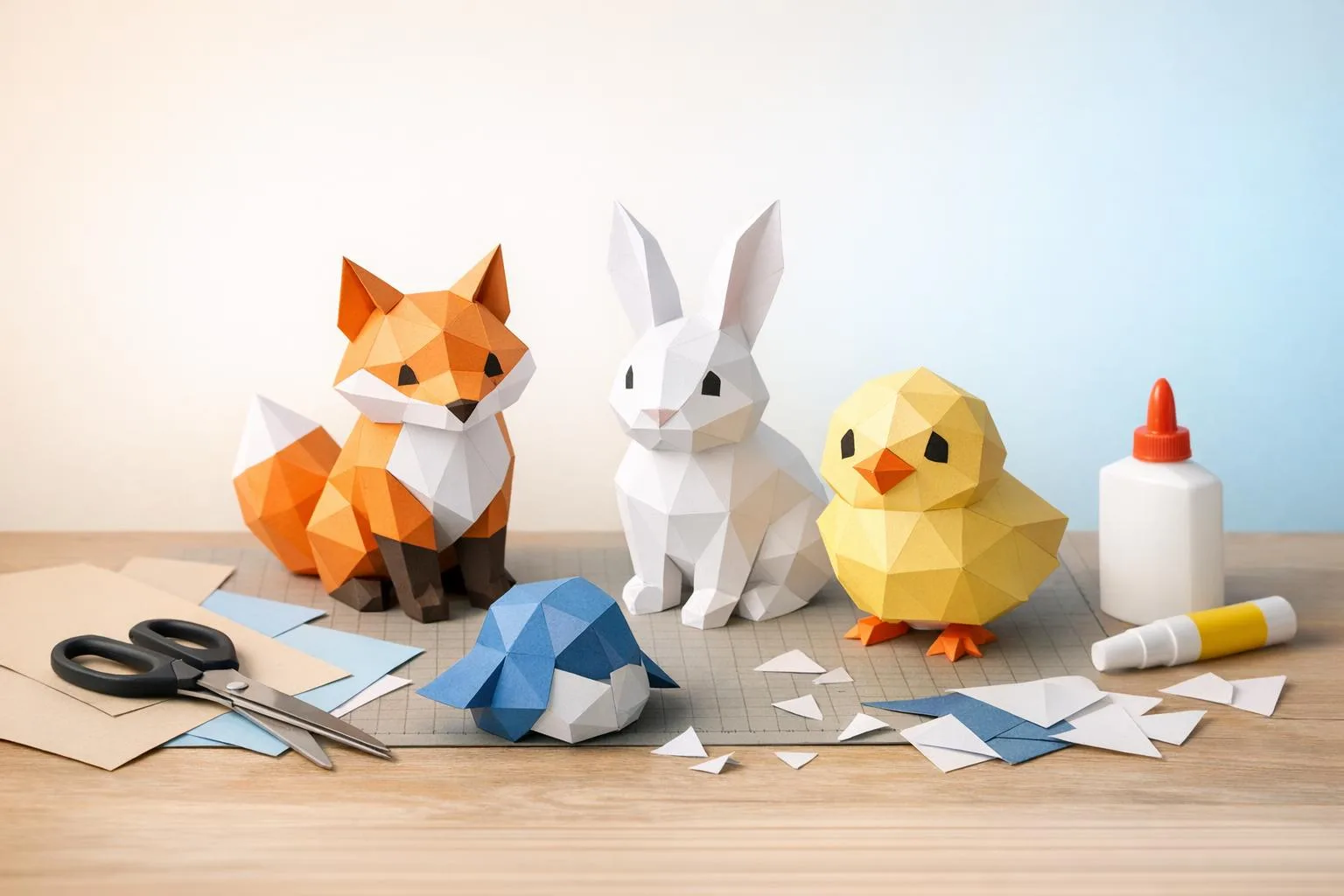
Want to get into papercraft without hitting a wall after 20 minutes, drowning in tabs and getting zero enjoyment out of it? The right beginner papercraft kit changes everything: short build time, easy-to-read shapes, a rewarding final result, and a smooth learning curve. Start with a model that actually fits your level, and you’ll quickly understand folds, build confidence, and want to make another one straight away. In this guide, I’ll help you pick a simple, good-looking, genuinely motivating kit so you can start without getting discouraged. You’ll discover why these easy models are so popular in 2026, our top 10 beginner-friendly kits to assemble, the practical criteria for choosing the right one for your level, and a quick 5-step tutorial to nail your first build. If you want to start with a project that’s accessible, decorative, and satisfying, you’re in the right place.

Why beginner papercraft kits are booming in 2026
In 2026, papercraft is no longer just a “niche” hobby for model-making enthusiasts. It has become a creative activity that’s accessible, relaxing, and highly visual. The “beginner papercraft kit” format is a perfect match for what many people want today: a real break from screens, a hands-on activity, and quick satisfaction. In practice, easy models with few parts, a 1-to-3-hour build time, and clearly defined shapes are the ones turning curious first-timers into real fans.
This success also comes from a shift in how people use papercraft. You’re not just building for the sake of making something anymore - you’re building to decorate too. A Pokémon figure on a shelf, a sky panorama in a child’s room, an iconic character on a desk: papercraft has become part of interior styling. That’s especially true with beginner kits, which offer an excellent effort-to-result ratio. You don’t need an entire weekend or a workshop full of tools to get a clean, stylish piece.
Another key reason: beginner papercraft feels reassuring. Unlike some DIY projects that demand technical precision from the very start, here you improve by understanding the logic of folds, numbers, and assembly steps. You build useful habits from your very first model: pre-folding properly, using the right amount of glue, holding angles for a few seconds, and planning the assembly order ahead. Once you’ve learned these basics, moving on to more ambitious creations feels natural.
Easy models are also a great fit for family activities. A motivated child, a teen who loves anime or Pokémon, or an adult trying a simple creative hobby for the first time - there’s something for everyone, as long as you choose a kit that matches the person’s age and patience level. If you want to explore the decorative and creative side further, I also recommend our article on paper art and papercraft, as well as our guide on how to choose paper for papercraft. And if you’re wondering which glue to use to avoid messy results, take a look at which adhesive to choose for papercraft too.
Put simply, beginner papercraft kits are thriving in 2026 because they combine three rare things: fast learning, instant enjoyment, and real decorative value. You’re not just “trying an activity” - you’re creating an object you’ll actually want to keep, gift, or proudly display.
The 10 best beginner papercraft kits to assemble
For more ideas and formats, explore 3D papercraft kits.
Origami Hippo Family Papercraft
Price: 18 € - Level: beginner
If you want a true first project with zero stress, this hippo family is one of the best picks in the catalogue. The volumes are rounded, the shapes stay easy to read, and the final result is instantly charming. It’s exactly the kind of model that helps you understand how papercraft works without overwhelming you with detail. It’s a great fit for a parent-and-child activity or a first solo build. On top of that, the “family scene” vibe adds a soft, playful decorative touch that works perfectly in a bedroom, bookshelf, or creative corner.
3D Origami Balloons and Clouds Sky Panorama Papercraft
Price: 20 € - Level: beginner
This kit has a huge advantage for first-timers: instead of relying on one large complex figure, it’s built around a simple visual composition. The balloons, clouds, and panorama effect make the build feel more intuitive, with progress that stays motivating from start to finish. You see the whole piece coming together quickly, which is ideal when you’re new and need fast visual feedback. It’s also a fantastic decorative option for a child’s room or reading nook. If you want a beginner papercraft kit that feels poetic, colourful, and approachable, this is a safe bet.
Christmas Snoopy Origami Papercraft
Price: 17 € - Level: beginner to easy
This model is a smart first build because it focuses on recognisable shapes and instant charm. When you’re working on a lovable character, it’s much easier to stay focused all the way to the end. Christmas Snoopy works especially well as a seasonal project, a handmade gift, or a desk decoration. The level stays accessible, and the final result immediately looks like a proper finished piece. For a first experience, that matters: you learn the core techniques while creating something you’ll genuinely want to display.
3D Origami Goku Bust Papercraft
Price: 17 € - Level: motivated beginner
Love iconic characters and want a first model with a bit more visual impact? The Goku bust is an excellent middle ground. It stays compact, which makes it less intimidating than a full figure, while still delivering a strong identity thanks to the hair and facial structure. It’s a great kit for learning how to handle sharper angles without stepping into real difficulty. If you’re a Dragon Ball fan, your motivation will do the rest. And as décor, it looks perfect on a gaming desk or pop culture shelf.
Young Goku Origami Papercraft
Price: 24 € - Level: beginner to light intermediate
This kit is for anyone who wants to start with a full character without jumping into something too dense. Young Goku has the advantage of being expressive, dynamic, and really enjoyable to watch come together. You work on more areas than with a simple bust, which makes it a great stepping stone if you want to learn without skipping levels. The final piece has real presence, and this is often the kind of model that makes people want to keep going with papercraft. Ideal if you want a more “collector-style” first build while staying within a manageable level of difficulty.
3D Origami Mr. Mime Papercraft
Price: 20 € - Level: beginner
Mr. Mime is a great beginner pick if you want an original character with clearly separated volumes. The segmented shapes help you understand zone-by-zone construction: head, arms, legs, torso. That makes it easier to assemble cleanly without getting lost. Beginners often like this model because it has a fun, offbeat look that stands out from more conventional figures. It’s also useful for improving fold consistency. If you want a Pokémon that’s easy to recognise, has a clear silhouette, and offers real decorative appeal, this is a solid choice.
3D Origami Psyduck Pokémon Papercraft
Price: 18 € - Level: beginner
Psyduck is one of the most reassuring models to start with: simple silhouette, instantly recognisable face, and overall rounded shapes. It’s exactly the kind of beginner papercraft kit people recommend when they want to avoid frustration. You can focus on the right habits - clean folding, precise gluing, holding the joins properly - without dealing with too many tiny details. The final result appeals just as much to kids as it does to adult Pokémon fans. It’s also a great shelf piece if you want something fun, light, and nostalgic.
Cubone Pokémon Origami Papercraft
Price: 19 € - Level: beginner
Cubone is an excellent entry point if you want a character with strong visual impact that still feels easy to understand during assembly. Its design is built around clearly defined elements - head, skull mask, compact body - which makes piece orientation much easier. For a beginner, that’s a big plus: you quickly understand where everything goes, and the model rewards your effort fast. The final result has real personality without demanding the stamina of a large, complex build. It’s the right choice if you want an accessible kit that still gives you a figure that really stands out.
3D Origami Ponyta Pokémon Papercraft
Price: 24 € - Level: motivated beginner
Ponyta is perfect if you want a first kit with a bit more style. The silhouette is elegant, the visual presence is strong, and once finished, it really feels like a decorative object. It asks for a little more care than the simplest projects in this selection, especially when it comes to keeping the lines clean, but it’s still very approachable as a first real build if you take your time. It’s a great choice for Pokémon fans who want to avoid something that feels too childlike. On a shelf, it delivers a more graphic, more confident look.
3D Origami Tweety Papercraft
Price: 22 € - Level: beginner
Tweety is a great model to start with thanks to its instantly familiar look. When you know the character, it’s easier to picture the final volumes, and that helps a lot during assembly. It sounds small, but it matters: when you already know what the character should look like, you spot a wrongly oriented piece much faster. This kit offers a nice balance of fun, simplicity, and decorative appeal. It’s especially well suited if you want a papercraft project to make as a family or to gift to someone who loves classic cartoon characters.
3D Scrat Ice Age Papercraft
Price: 23 € - Level: beginner to light intermediate
Scrat is an excellent model for beginners who want something expressive and a little more dynamic. The character is instantly recognisable, which makes the whole build highly motivating. Some sections demand a bit more precision than the easiest models in this top list, but nothing overwhelming if you’ve already handled one or two simple kits. Its biggest strength is the final wow effect: lots of personality, plenty of humour, and a style that grabs attention. This is the ideal kit if you want to improve while keeping the project playful and enjoyable.
Want even more easy models to learn without pressure? Explore the 3D origami for kids collection. You’ll find beginner papercraft kits designed to offer a clear, fun, rewarding build, with themes that are perfect for a first project or a creative family activity.
How to choose a beginner papercraft kit
Choose based on the real time you can give it
The first criterion is simple: your time. Many beginners give up not because the model is too hard, but because they underestimated how long it would take. For a first experience, aim for a kit you can finish in 1 to 3 hours max. That’s the sweet spot for staying focused, completing it in one go, and getting that satisfying sense of achievement. If you only have an hour, go for something simple and compact. If you’ve got a full creative afternoon ahead, you can choose a slightly more detailed character.
Prioritise a clear silhouette
When you’re starting out, it’s best to avoid overly complex shapes, thin protruding elements, or assemblies where all the pieces look the same. A clear silhouette helps you understand where each part belongs. Compact characters, stylised animals, and busts are often easier to succeed with than large technical compositions. That’s why models like Psyduck, Cubone, or the hippo family are often such strong first choices.
Take your personal motivation seriously
The best beginner papercraft kit isn’t always the one that looks simplest on paper - it’s often the one you genuinely want to finish. If you’re a Dragon Ball fan, a Goku model will motivate you more than a generic design. If you love Pokémon, you’ll naturally be more patient with Ponyta or Mr. Mime. Motivation plays a huge role in your first successful build. It helps you stay careful, start over calmly if needed, and actually see the project through to the end.
Check the goal of the model: learning or décor
Some kits are perfect for learning the basic moves. Others are slightly more ambitious but offer a more striking decorative result. Ask yourself that question before you choose. Do you mainly want to test the technique and understand how papercraft works? Then start with a very accessible kit. Do you want to create something you’ll proudly display in your living room or workspace right away? Then go for a simple model with a strong visual identity. The key is finding the right balance between visual pleasure and real difficulty.
Don’t overlook the tools around the kit
Even with an excellent kit, the experience can be ruined if you use the wrong glue or fold without properly marking the lines. Set yourself up with a clean surface, a precise glue that won’t soak the paper, and a small tool to score the folds if needed. The setup stays simple, but it saves time and noticeably improves the finish. If you want to start on solid ground, our guide on choosing the right adhesive can really help you avoid the classic mistakes.
Start easy, then level up gradually
The best advice is also the simplest: don’t try to “prove” anything with your first kit. The goal isn’t to choose the most impressive model, but the one that makes you want to build a second one. A smart progression could be something like this: a simple panorama, then a compact animal, then a more detailed character. In just a few projects, you can already develop real confidence. And if you want to explore more ambitious themes after that, you can move into specific worlds like prehistoric creatures with our complete dinosaur papercraft guide.
Tutorial: assemble a beginner papercraft kit in 5 steps
Step 1: set up your space and tools
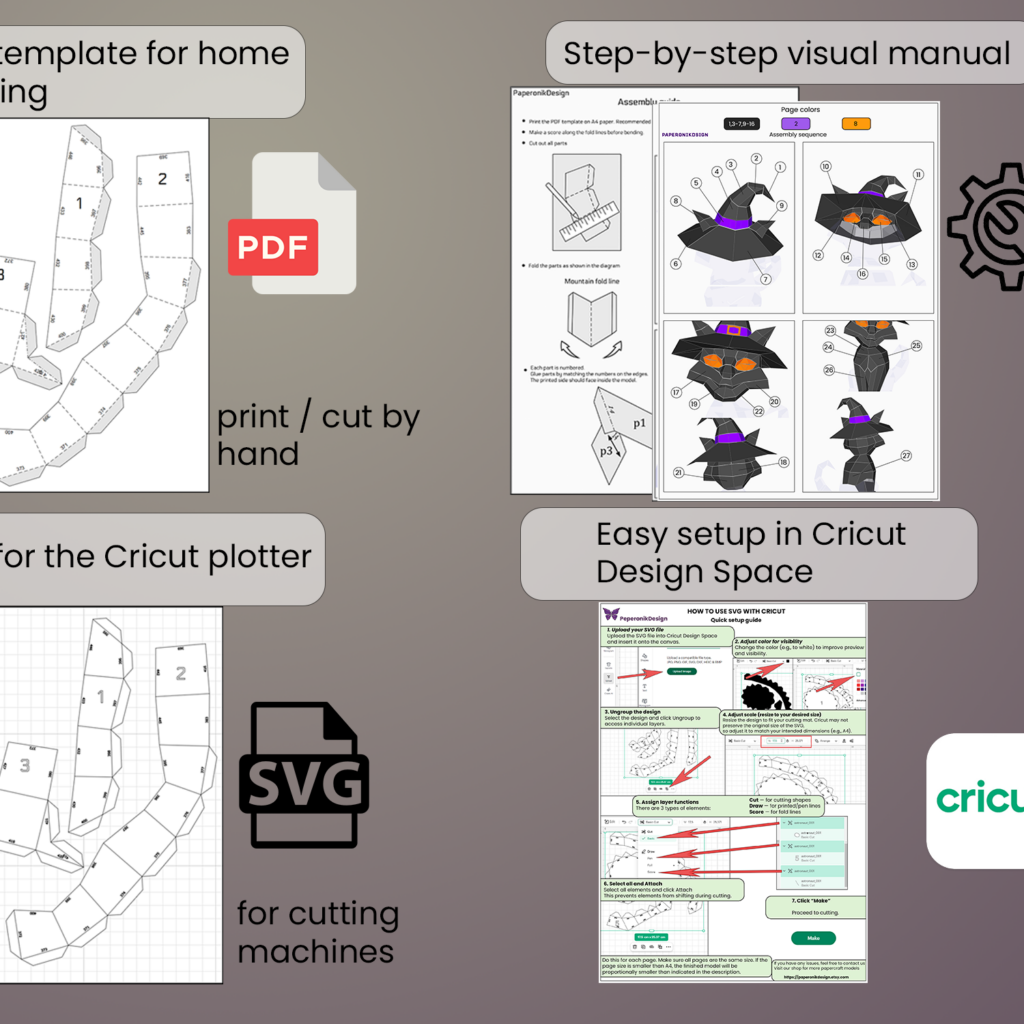
Get settled at a well-lit table with enough room to spread out the sheets without bending them by accident. Have your glue ready, along with a cloth or tissue to wipe away any excess, and if possible a small tool to mark folds. Work in a calm space: rushing is the enemy of a clean first build. Before you begin, look over the pieces and get a feel for the overall structure of the model.
Step 2: cut out and identify the pieces
If your kit requires it, carefully cut out the elements while following the outlines precisely. Then sort the parts by area or by logical build order. This small bit of organisation saves you a surprising amount of time. Also check the numbers or assembly markers. A lot of beginners don’t go wrong because of the gluing itself, but because they didn’t anticipate the next steps. It’s much better to spend 5 minutes understanding the layout than 20 minutes fixing a mistake.
Step 3: mark all folds before gluing
This is the most underrated step. By pre-folding the tabs and main lines neatly, you make the gluing process much easier. The paper already “understands” the shape it’s meant to take, which reduces tension on the joins. The result: fewer glue smears, fewer misaligned parts, and a cleaner finish overall. On a beginner papercraft kit, this habit makes a huge difference.
Step 4: use a small amount of glue, but place it precisely
You don’t need much. A thin layer of glue on the tab is enough in the vast majority of cases. Then hold it in place for a few seconds so it can bond properly. Follow the recommended order and avoid closing off an entire section until the neighbouring parts are ready. This method reduces awkward handling and helps you keep the edges crisp.
Step 5: let it rest and adjust the final shape
Once the model is finished, let it sit for a few minutes before moving it. Use that time to check the overall alignment, straighten a few edges slightly, or gently pinch an area that needs a sharper finish. This quick finishing phase often makes the final result look much cleaner. For your first kit, don’t chase absolute perfection - aim for a build that’s sturdy, neat, and complete. That’s how you improve fast.

Decor ideas / display styling
A beginner papercraft kit isn’t just for learning - it can also become a real decorative feature. Here are 5 simple and effective ways to show it off once it’s assembled.
- On a pop culture shelf: group Goku, Ponyta, Psyduck, or Cubone with a few manga volumes, video games, or figures to create a cohesive themed corner.
- In a child’s room: place the balloons-and-clouds panorama or the hippo family near a book, night light, or pastel frame for a soft atmosphere.
- On a creative desk: a small character like Mr. Mime, Snoopy, or Tweety adds a playful touch without cluttering your workspace.
- As seasonal décor: Christmas Snoopy fits perfectly on a festive table, hallway console, or winter shelf with fairy lights.
- In a display cabinet or bookcase: more graphic models like Ponyta or Scrat look best at eye level, with a simple background that lets their volumes stand out.
Frequently asked questions
What’s the best beginner papercraft kit for a first try?
For a very first experience, choose a model that’s simple, easy to read, and visually motivating. The hippo family, Psyduck, or the balloons-and-clouds panorama are excellent starting points. They let you learn the basics without technical overload.
How long does it take to assemble a beginner papercraft kit?
Most good beginner kits take between 1 and 3 hours to assemble. It depends on your pace, your experience with crafts, and how carefully you handle the cutting and gluing. For a first kit, always allow yourself a little extra time.
Do you need specific tools to get started?
No, you don’t need anything complicated. A paper-friendly glue, a flat surface, a bit of patience, and ideally a tool to mark folds are more than enough. The most important thing is simply to work neatly and not rush.
Is papercraft suitable for children?
Yes, as long as you choose a model suited to their age and provide guidance if needed. The simplest, most visual kits work very well as a family activity. The main things to consider are fine motor skills and attention span.
What glue should you use to avoid messy smears?
A precise glue that doesn’t soak the paper is ideal. Use only a small amount and apply it only to the tab. If you’re unsure, check our dedicated guide: which adhesive to choose for papercraft.
Is it better to start with an animal, a character, or a scene?
For many beginners, simple scenes and compact animals are the easiest way in. But if you’re a big fan of a specific universe, a character may keep you more motivated. The best choice is the one that combines accessibility with a genuine desire to finish the project.
What should you do if a piece is glued in the wrong place?
Don’t pull hard. Try to gently peel it back while the glue hasn’t fully set, then reposition the tab. If the area is already fixed in place, focus instead on correcting the alignment with the next pieces. On a first kit, a small imperfection won’t stop you from getting a great final result.
After a beginner kit, what should you move on to next?
The best approach is to increase the difficulty step by step: more volume, more detail, or a more dynamic character. Start with a second easy model, then move to something slightly more ambitious. That progression helps you improve your precision without killing the fun.
Conclusion - where should you start?
If you want one simple piece of advice, start with a beginner papercraft kit that ticks three boxes: a reasonable build time, an easy-to-read silhouette, and a theme you genuinely like. For a soft and easy introduction, the hippo family, the balloons-and-clouds panorama, or Psyduck are all very safe choices. If you want a first model with a little more fan appeal, the Goku bust, Cubone, or Mr. Mime offer an excellent balance. What matters most isn’t choosing the most impressive kit - it’s choosing the one that lets you finish your first build with real enjoyment. That first success is what makes you want to keep going, improve, and turn papercraft into a lasting creative hobby.
Ready to start? Pick your favourite beginner papercraft kit now and begin with a model that’s accessible, motivating, and genuinely display-worthy. On Papercraft-3D.com, you get free shipping from €69 to France and across Europe, including Switzerland.
Read next
- Paper art, origami, papercraft: understand it all
- How to choose paper for papercraft
- Which adhesive to choose for papercraft
- Dinosaur papercraft: complete guide
You may also like: a Gengar papercraft.