


Educational papercraft, turnkey for your classes
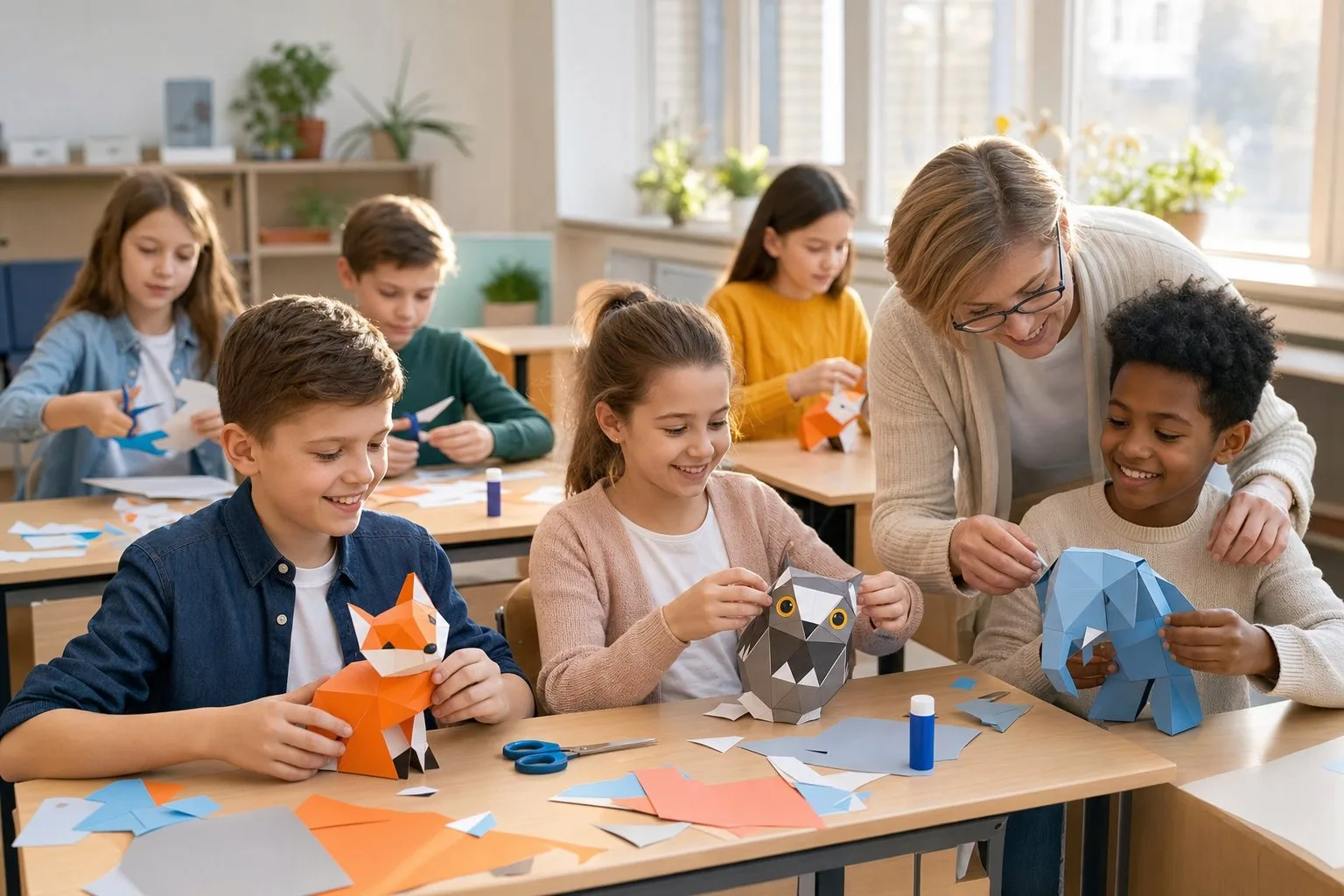
Ready-to-use papercraft activities for active and cross-disciplinary sessions, from primary school to high school. Students observe, cut out, fold, assemble: they learn geometry, visual arts and the project approach… through hands-on practice.
A pack designed in partnership with 
Payment for schools & local authorities
In partnership with Pass Éducation
Pass Éducation, a benchmark for educational resources for teachers, is partnering with PaperCraft-3D to design hands-on activities aligned with school curricula. Our shared goal: concrete, inclusive and motivating learning, from cycle 2 to high school, placing the student’s hands at the heart of understanding.
Handle to understand, create to remember
Papercraft gets students moving: a hands-on and engaging practice that develops geometric, artistic, methodological and manual skills, while cultivating patience, independence and cooperation.
Active learning
We cut, fold, assemble, document: handling helps concepts take root.
Multiple skills
Geometry, visual arts, fine motor skills and a project-based approach in a single activity.
Inclusive & differentiated
Several levels of templates and varied roles so that every student can contribute.
Motivating & rewarding
A concrete result to be proud of: mini-exhibition, portfolio, “before / after” sheet.
Objectives adapted to each level
Progressions and assessment criteria proposed by level, from primary school to general, technological and vocational high school.
Cycle 2 · 3 · 4 - primary & middle school
- Geometry : plans, volumes, spatial positioning, templates, scales
- Fine motor skills : precision of movement, simple tools
- Follow-through : follow a procedure, anticipate the steps
- Visual arts : volume, color, texture, intention
High school - technical & vocational
- Object design : intention, constraints, iteration
- Rapid prototyping : materialize an idea, test, improve
- Rigor & documentation : instructions, procedure sheets, logbook
Teaching, assessment and implementation
Teaching & assessment
- Active approach : handling to understand, verbalizing choices, cooperating
- Differentiation : template variants, adjustable durations, roles within the group
- Written record : observation sheets, captioned photos, sketches, glossary
- Showcasing : mini-exhibition, digital portfolio, “before / after” sheet
Implementation - simple & flexible
- Fits into short sequences (e.g. 3 × 45 min) or a project over several weeks
- Compatible with whole class, half-groups, ULIS/SEGPA, clubs and workshops
- Requires standard materials (paper, scissors/safety cutter, glue) - no specific equipment
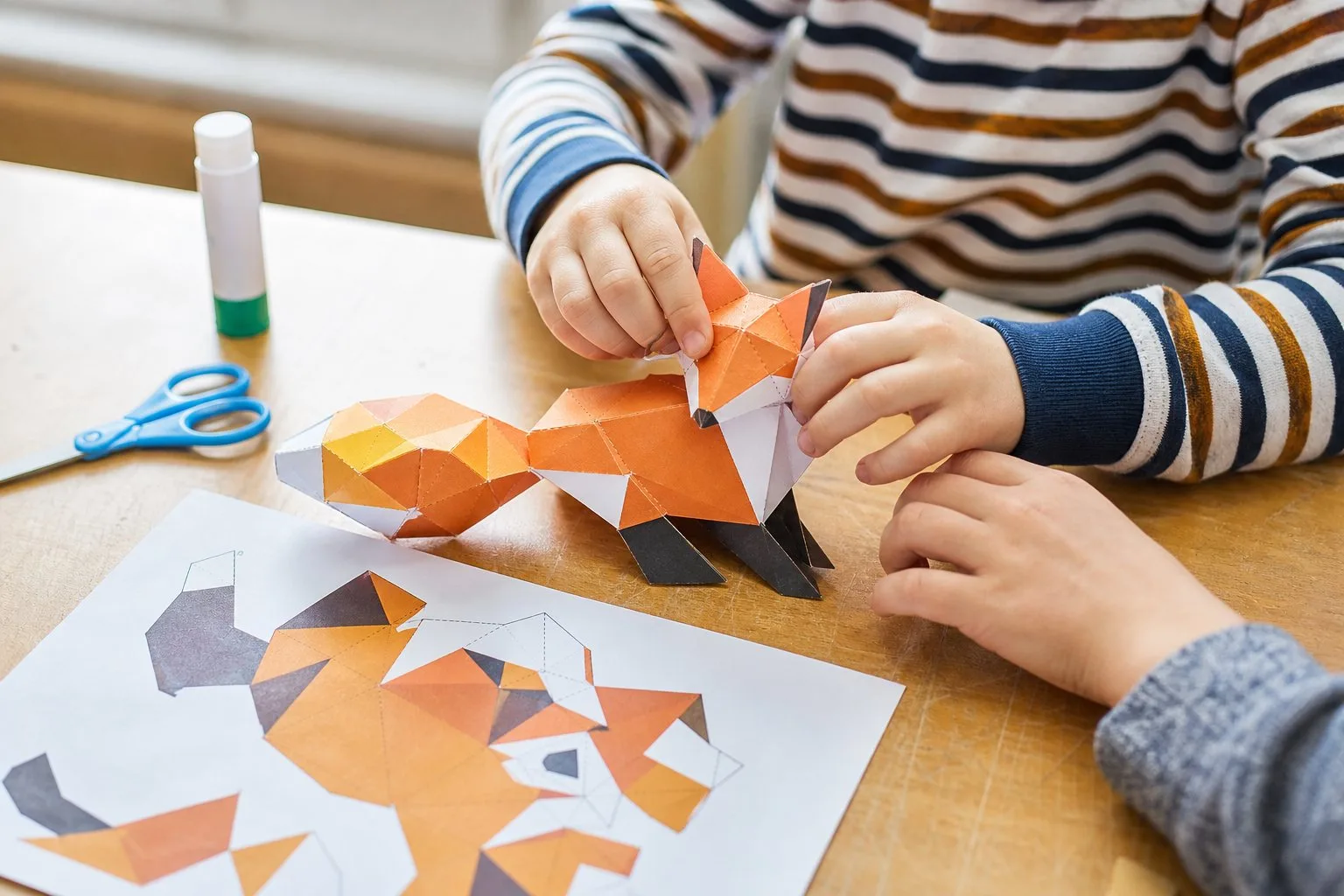
In concrete terms, what does a session look like ?
Three examples adaptable according to your level, your class size and your subject.
Cycle 3 - Geometry
Templates & volumes. Students assemble a low-poly solid to understand faces, edges, vertices and scales. ≈ 3 × 45 min.
Cycle 4 - Visual arts
Volume & intention. Creation of a wall-mounted animal head: color, texture, composition and artistic stance. Project over 2-3 sessions.
High school - Design & technology
From idea to object. Model, unfold, prototype then improve a paper piece. Project sequence.
From your class project to the quote, in 4 steps
Simple support, designed for schools and local authorities.
Tell us about your class
Level, class size, objectives (subject / skills) and desired period.
We guide you
We suggest the suitable pack, or a custom creation aligned with your curricula.
Compatible with administrative payment order
A clear and quick quote, payable by administrative payment order, with detailed references on request.
You receive & run the activity
Ready-to-print files (and physical elements depending on the project), with support for preparation.
Do you have a question?
What levels are your resources intended for?
From cycle 2 to high school (general, technological and vocational tracks). Progressions and assessment criteria are provided by level.
How much time should be planned?
In a class format, typically allow 3 × 45 min for a complete sequence. Exhibition projects are spread over several sessions, at the school’s pace.
Is specific equipment required?
No. Paper, glue, scissors or a safety cutter and rulers are enough. We indicate alternatives depending on your equipment.
Is it compatible with a skills-based approach?
Yes. The expected outcomes (geometry, visual arts, project-based approach, communication) are clearly set out and can be co-assessed.
Do you offer differentiation?
Yes. Several template levels and varied roles (cutting, folding, assembling, documentation) facilitate inclusion and peer support.
How to order and pay?
Payment can be made by administrative order for public institutions and local authorities. We provide a quote and detailed references on request.
Do you deliver digitally, on paper, or both?
We offer print-ready files and, depending on the project, physical elements. The details are specified at the time of the quote, according to your preferences.
Tell us about your class
Indicate the level, class size, your objectives (subject / skills) and the desired period. We will guide you toward the suitable pack, or a custom creation, and send you a quote compatible with administrative order.
- ✓ Clear and fast quote
- ✓ Payment by administrative order
- ✓ Resources aligned with curricula
- ✓ Preparation support
Pack designed in partnership with